Another bus journey and a creative writing workshop

A few weeks ago, I spotlighted the first Jay-Jay bus adventure. Well there are five more in the series and, since I’m Scottish, the story behind his Island Adventure caught my attention …

Over to Sue …

‘Jay-Jay and his Island Adventure’, was originally written for a Scottish book bus.

‘Play,Talk, Read’ was the project which visited remote areas if Scotland to encourage reading in the very young. It was a great success and the bus even visited the Shetland Islands travelling on a very small ferry.

The children had never seen a double-decker on their island before and certainly not one to play on.

However, the Scottish project was too busy with referendums and with the book ready and edited, I changed the name of the bus from Benji, sending Jay-Jay instead, and relocating to Spain.

The island on the cover of the book was based on a piece of mainland Spain which I have visited many times. Cap D’Or is the promentory near to a little village of Moraira.

The villagers in Moraira invited me to read this book in their library and local schools. The people in this little village were surprised to find that Jay-Jay was a real bus. Now all of the books are in the local library in both Teulada and Moraira.
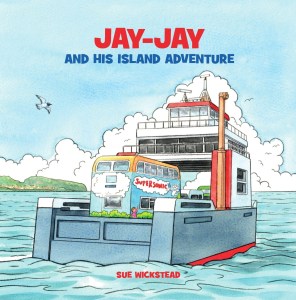
JayJay2_Cover_AW-1 (3)


Review

I haven’t got much more to say than for the first Jay-Jay book: this is a super positive story for readers ready to start tackling longer books, but reluctant to let go of the pictures. The illustrations are gorgeous in a lovely traditional style (think Famous Five rather than Charlie & Lola or Neon Leon). For parents and teachers, if you’re bored to tears with Biff and Chip, please add this to your reading pile! 

Of course, as a Scot, I wish it had stayed in a Scottish island, but Jay-Jay relocated well (which fits neatly with my recent blogs on expat life!)

Creative Writing Workshop

Sue and I are doing a creative writing workshop at the Festival of Chichester on Saturday 29th June where we’ll plan a journey, and make some badges to go with it. Do come and join us!

A7B99F1A-E8DE-4B5C-879A-301A39499276


Giveaway to Win Jay Jay and the Carnival (UK Only)

*Terms and Conditions –UK entries welcome.  Please enter using the Rafflecopter box below.  The winner will be selected at random via Rafflecopter from all valid entries and will be notified by Twitter and/or email. If no response is received within 7 days then Rachel’s Random Resources reserves the right to select an alternative winner. Open to all entrants aged 18 or over.  Any personal data given as part of the competition entry is used for this purpose only and will not be shared with third parties, with the exception of the winners’ information. This will passed to the giveaway organiser and used only for fulfilment of the prize, after which time Rachel’s Random Resources will delete the data.  I am not responsible for despatch or delivery of the prize.

http://www.rafflecopter.com/rafl/display/33c69494228/


Does your family like spicy food?

It’s been a while since I showcased a cookbook, but this one is packed with recipes I want to eat NOW (and it’s only 8 a.m.). I’m lucky that my kids are happy to eat a bit of spice, in fact the chicken wing roulette at Nando’s is their favourite “treat” … honestly – they were having fun!


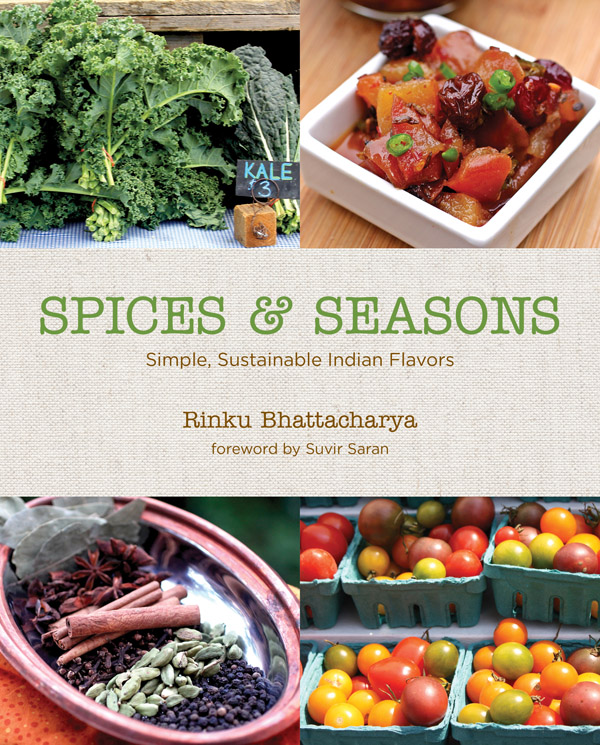
Spices and Seasons Indian cookbook

Spicesandseasonsmed

I eagerly grabbed a review copy of this cookbook and I absolutely love the recipes, but there are a caveats for UK readers though

  • it’s all in American measures – cups and pounds. I can estimate a cup, but it would be so much easier if there were UK measures added to help international cooks.
  • on a similar theme, it uses American terminology so all the recipes I looked at required a bit of interpretation, e.g. cilantro (coriander), all-purpose flour (plain flour) and heavy cream (I actually don’t know if this is double cream or whipping cream?)
  • some tricky ingredients – I’d struggle to find mace blades where I live, so would have to swap for nutmeg.

That means I’d need to buy a paperback not ebook so I could annotate the recipes or it would drive me nuts, but it’s definitely worth a space on my shelf.

Here’s an example for you …

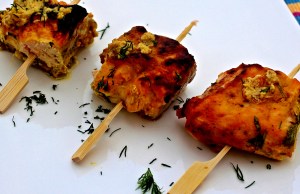
Saffron and Almond Salmon Kebabs

Our friend Vivek Kumar, who makes a tandoori version of fish kebabs, inspired these salmon kebabs. I love delicately grilled or baked fish morsels and decided to see if I could do more with the spicing. This recipe emerged. The spices in this recipe are designed to highlight and accentuate the saffron which leaves a delicate orange color against the natural pink of the rich-tasting salmon. Since I do not use additional cream, it is important to use whole milk Greek yogurt in this recipe.

Content For Mum’s Book Blast -Saffron and Almond Salmon Kebabs

Prep Time: 10 minutes plus 2 hours for marinating | Cook Time: 15 minutes | Serves: 4 to 6

Ingredients

½ cup whole milk Greek yogurt

½ cup blanched almonds or cashew nuts

1-inch piece fresh peeled ginger

2 green chilies

1 teaspoon saffron strands

¾ teaspoon salt or to taste

2 or 3 mace blades

⅛ teaspoon nutmeg

1½ pounds salmon fillets, cut into 1½-inch pieces

2 tablespoons oil

1 tablespoon chopped fresh dill to garnish (optional)

Preparation

  1. Place the yogurt, almonds or cashews, ginger, green chilies, saffron, salt, mace blades, and nutmeg in a blender and grind until smooth. You will get a pretty saffron-colored thick sauce.
  2. Place the salmon in a mixing bowl and gently toss with the yogurt mixture. Marinate for about 2 hours in the refrigerator.
  3. Pre-heat oven to 350ºF. Grease a baking dish with 1 tablespoon of oil.
  4. Place the salmon pieces with the marinade on the baking dish about 1 inch apart to allow room to pick the cooked pieces up neatly (skewers are optional). Drizzle with the remaining tablespoon of oil.
  5. Bake the salmon for about 10 minutes, then broil for 2 to 3 minutes to gently brown the top (the salmon should have a few golden brown specs, but it is important not to dry it out).
  6. Serve immediately garnished with dill.


Blurb

Rinku Bhattacharya combines her two great loves―Indian cooking and sustainable living―to give readers a simple, accessible way to cook seasonally, locally, and flavorfully. Inspired by the bounty of local produce, mostly from her own backyard, Rinku set out to create recipes for busy, time-strapped home cooks who want to blend Indian flavors into nutritious family meals. Arranged in chapters from appetizers through desserts, the cookbook includes everything from small bites, soups, seafood, meat and poultry, and vegetables, to condiments, breads, and sweets. You’ll find recipes for tempting fare like “Mango and Goat Cheese Mini Crisps,” “Roasted Red Pepper Chutney,” “Crisped Okra with Dry Spice Rub,” “Smoky Roasted Eggplant and Tomato Puree,” and “Red Harvest Masala Cornish Hens,” to name a few. As exotic and enticing as these recipes sound, the ingredients are easily found and the instructions are simple. Rinku encourages readers to explore the bounty of their local farms and markets, and embrace the rich flavors of India to cook food that is nutritious, healthy, seasonal and most importantly, delicious.


About Rinku Bhattacharya

Rinku Bhattacharya (spicechronicles.com) was born in India, and now lives in a house with a vibrant backyard in Hudson Valley, New York with her husband, an avid gardener, and their two children. Rinku’s simple, sustainable approach to Indian cooking is showcased on her blog, Spice Chronicles, and in her Journal News column “Spices and Seasons.”

Rinku has been teaching recreational cooking classes for the past nine years, and works extensively with local area farmer’s markets on seasonal demonstrations and discussions. Rinku is also the author of The Bengali Five Spice Chronicles (Hippocrene Books, 2012), winner of the Gourmand World Cookbook Awards 2013 for Best Indian Cuisine. She writes for the Poughkeepsie Journal, the Journal News, and several online sites, and is a frequent guest on CT Style TV.

https://twitter.com/Wchestermasala

https://www.instagram.com/spice_chronicles/

https://www.pinterest.co.uk/rinkub/?autologin=true

https://www.facebook.com/spicechronicles


Purchase Links

US – https://www.amazon.com/Spices-Seasons-Simple-Sustainable-Flavors/dp/078181331X

UK – https://www.amazon.co.uk/Spices-Seasons-Simple-Sustainable-Flavors/dp/078181331X


Do I need an English culture coach?

Since I featured the book Bloom Where You’re Planted on expat life, I’ve had people asking me about relocating, so I thought it would be interesting to invite a professional to provide another perspective. Victoria runs Perfect Cuppa which supports people, usually professionals, relocating to the UK with the language and culture. Since my blog is not a corporate blog, we had a chat about settling the family in, which was not covered in great depth in the Bloom book.

Anywhere, here she is with her top tips …

Top tips for settling your family into the UK

Moving to a new country can be a big challenge, even if you have done it previously. In  fact many people I meet as clients believe moving to the UK will be easy, as London is a large, multi-cultural city with English as the international language. This is true to a certain extent, however, relocating to London with a family might not be as straight-forward as it seems, so here are my top tips to help the kids feel settled quickly & you feel orientated & more plugged in.

  1. School gate chat: chatting to other parents at drop off & pick up time, is a great way to have your questions answered about the school, how things are done & where to find things in the local area. Not sure how to kick off? In the UK the weather is a good topic & we like to comment on the weather, even it’s only a little bit warm or cold! But of course anything to do with school is a hot topic like SATS (the national tests in years 2 & 6. The British are quite keen on testing kids, even at early ages), whether people are tutoring or not (can be controversial), homework etc.
  2. Coffee mornings: depending on the school, you may find coffee mornings are organised as socials or information meetings, and you can meet other parents & learn more about what’s going on in the school. Don’t be fooled by the name, yes there is coffee, but tea is still the drink of choice in the UK. Usually drunk with cold milk (not hot milk or cream), the most popular way to make tea is in a mug, tea bag first, then hot water, finally milk. If you have a friend around, you will need a kettle to make a proper cuppa! I don’t recommend making a cup of tea in the microwave, it just doesn’t taste nice.
  3. Lunchtime: School dinners confusingly can be the name of the meal at lunchtime, and every school will provide an option to eat there. The meals are free for school years Reception to year 2, and there is a small charge for the other years. If you prefer your child to have a packed lunch, then this is possible, and they can bring in a cold lunch, usually including the very English sandwich, in a lunchbox. Just check your school’s rules on what you can include, as some schools are very strict about nuts or chocolate, plus sweets & crisps (the British names for “candy” and “chips”).
  4. After-school fun: there are countless opportunities for after-school clubs, inside school & in externally-run groups. If you child is shy or they are trying to get better at speaking English, then they can get to know their classmates in a more relaxed environment. There is a group for anything & everything out there, and if you’re looking for recommendations, then check out your local parenting facebook group, e.g. “Hampstead Mums” is the facebook group to join if you live in Hampstead. Alternatively, I think Girl Guiding & Scouts are another good option for your kids to meet friends, and don’t forget there are a number of day activity camps in London during the school holidays.
  5. Play date rules: Another popular thing for after school in the UK are playdates. We tend to organise these in advance with the other parent, and it can be in a local playground, one of your homes, or soft play. Usually they are quite short, an hour or 2, and the kids will have a snack but won’t have a full dinner, unless you specifically make an arrangement. Play dates with younger children would expect you to go along too, but with older ones, if you’ve arranged for them to be picked up after school by the other parent, then you need to let the school know in advance that you give permission. Occasionally people will spontaneously organise a playdate, especially in the summer when lots of parents might head to the playground, but it’s more unusual.
  6. Chill time: a great way for your kids to understand British life & other children can be as simple as watching TV, and if English is a 2nd language, then this can help them improve. Even at advanced levels, it’s worth watching with the subtitles on to improve fluency & connect British pronunciation with words. I would highly recommend you check out programmes via the BBC i-player app, which is an on-demand service you can access for free if you have paid your TV license fee, and CBBC is the children’s channel. Current popular programmes include Blue Peter, Millie Inbetween, and the 4 o’clock club.
  7. Charity fundraising & dressing up:Whether it’s Red Nose Day, Halloween, or Children in Need Day, you need to know the British are pretty serious about key events in the calendar & charity fundraising. You can expect quiz nights, school fairs & fancy dress or “wear your own clothes” days (very exciting as British schoolkids usually wear a uniform), all ably organised by the school’s PTA (parent-teaching association). You can volunteer to help organise these events, which is another good way to make friends. Also don’t forget that fundraising & school events include lots of cakes, sugar consumption & prizes, all in the name of charity!


Thanks Victoria, I could do with some help on school gate chat myself! Hope you have found the tips useful and if you have any further questions do comment below or get in touch with Victoria directly: Victoria@perfectcuppaenglish.co.uk,www.perfectcuppaenglish.co.uk.

About Victoria

275A6498lowres2

Victoria Rennoldson, Founder of Perfect Cuppa English, was born in & has lived most of her life in London with her young family. After a first career in brand marketing, she re-qualified in teaching English, and took the plunge to become an entrepreneur. She set up her company, Perfect Cuppa English, in 2015 to offer private English language and British Culture courses for adults, in Everyday & Business English, for greater speaking confidence. She regularly gives talks and writes articles about British language, life & culture.

You can regularly find her zipping between client meetings on the London underground, and she’s now pretty fast on the escalators. Her favourite things include tea (of course);  a good pair of flat shoes to maximise speed up & down escalators on the speed dash between meetings; beautiful notepads & a great selection of coloured pens. If you’re making her a cuppa, she prefers Twinings English Breakfast tea.


A practical handbook for expat families

This caught my eye as I’ve been an expat, admittedly a long time ago. I know it sounds exciting and glamorous, and of course it is, but there are challenges. This book focuses on these aspects.

The book is written by Las, who is a “trailing spouse”, the non-working half of the family. It was actually my job that took us to Sydney, but my husband quickly found a job in his sector, so we avoided many of the isolation issues that she encounters and, other than distance from home, Sydney has to be one of the easiest places to settle as an expat, however much of the rest of the book resonated. I’ve also done a short stint as a trailing spouse in South Africa, where I got an insight into many of the struggles Las addresses.

The chapters cover a wide variety of topics. The chapter on packing was pretty basic, but the one on Expat Drop was extremely insightful – in fact any expat should read the book for this chapter alone.

Overall, I’d recommend this to anyone considering the expat life. I also think it would be useful for the working half of the team to read it to get a better understanding of some of the issues that their trailing spouse faces. My only gripe would be, it felt like it should be humorous, but it was neither totally funny, nor totally serious. The home help chapter for example nearly had me laughing out loud, but not quite.

One thing I would add from my personal experiences, is that it took us about 18 months to break out of the expat community and make local friends. That group are still some of my closest buddies even now, 20 years later, and some of them are settled in the UK!

Blurb

BloomWhereYourePlanted Cover

Are you contemplating a move abroad?

Don’t panic!

From culture shock to capable, from language barriers to lifelong friends, and from foreign land to the familiar. Being hurled into life in a strange new place can be daunting and overwhelming, but it can also be exciting and enjoyable.

Rich with tips on how to expat like a boss, Lasairiona McMaster’s “Bloom where you are planted”,takes you on a journey from packing up her life in Northern Ireland to jumping in at the deep-end as an expat in two countries.

An experienced expat from a decade of living abroad, her honest and uncensored tales of what to expect when you’re expatriating, are as funny as they are poignant, and as practical as they are heartfelt. If you’ve lived abroad, or you’re considering the move from local to expat. If you’re looking to rediscover yourself, or simply wondering how on earth to help your children develop into adaptable, resilient, and well-rounded people, this book has something for you.

About the author

AA6352F4-30A0-4D9F-9F1E-59B14C3BA2FB

Lasairiona McMaster grew up dreaming of an exciting life abroad, and, after graduating from Queens University, Belfast, that is exactly what she did – with her then-boyfriend, now husband of almost ten years. Having recently repatriated to Northern Ireland after a decade abroad spanned over two countries (seven and a half years in America and eighteen months in India), she now finds herself ‘home’, with itchy feet and dreams of her next expatriation. With a penchant for both travelling, and writing, she started a blog during her first relocation to Houston, Texas and, since repatriating to Northern Ireland, has decided to do as everyone has been telling her to do for years, and finally pen a book (or two) and get published while she tries to adjust to the people and place she left ten years ago, where nothing looks the same as it did when she left.

Social Media Links

Facebook – https://www.facebook.com/QueenofFireLas

Twitter –  https://twitter.com/QueenofFireLas

Instagram – https://www.instagram.com/queenoffirelas/?hl=en

Purchase Links

UK – https://www.amazon.co.uk/dp/B07RQ9BL6D/

US – https://www.amazon.com/dp/B07RQ9BL6D/

Traditional Bulgarian Easter egg painting

Happy Bulgarian Easter! Yes, it’s today – it’s celebrated at a different time to in the UK and is a very important date in the Orthodox calendar. We have several Bulgarian friends, and every year they bring us the most stunningly painted eggs. The tradition is you bash the top of each others eggs and the intact one is the winner and has a year of good luck. The winning egg is kept until the following year – seriously – I still have mine from last year. You can read more about the tradition here Traditional Bulgarian Easter eggs

400px-UkiePysanky2006

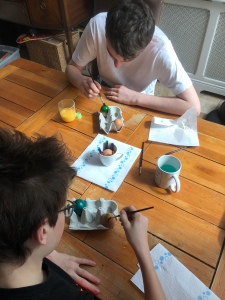
Attempt one: we tried dying them with food dye. Epic fail. Very pale and washed out. So for attempt two, we’ve bought proper egg paints, but there’s a slight technical hitch as the instructions are in Bulgarian. And the packet comes with plastic gloves, which is a rather worrying sign for a kids activity. A quick experiment with 3 to 4 drops doesn’t give enough colour intensity, so we decided to use the sachets neat.

Step 1: boil eggs for at least 10 minutes. I put kitchen paper in the bottom of the pan to stop the eggs from cracking.

Step 2: cut up an egg box to make a painting stand.

Step 3: cool eggs.

Step 4: warm the gel sachet paints to soften, if you’re using ones like I bought.

6A671BA5-6961-46F1-8868-EB165F79CA16

Step 5: dip brushes in the gel sachets and paint directly onto the eggs.

C817D258-DE23-4251-A6A9-D4FAEDCF0722

Step 5: use the gold paint as a final decorative layer. Our finished eggs

7E2AC1C0-BDA7-41D2-8916-3DC7F6998F12

Now for the competitive side as the siblings attack each others eggs …