Lessons from a 9 year old coder

I’m literally bursting with excitement at introducing my guest today. Yeva Patterson is an ultra cool 9 year old coder. She’s a big supporter of girls in tech and STEM, and I reckon she’s probably the youngest VR developer in the world! Today she’s sharing her tips to help get other kids into coding, and a special selection of book recommendations on coding for kids.


So over to Yeva …


How I Got Into Coding

My parents are developers and they started teaching me how to code when I was 5 years old.

They were developing a mobile educational math app and they let me help. I would build levels for it and they actually put them into the app! I was so excited that people would play what I built so I kept going, learning more about coding and finding out what else I could create.

I realized that learning to code allowed me to be creative in a whole new way. I learned that you can code computers to do just about anything.

I found code.org tutorials particularly fun and helpful and progressed through their curriculum. I enjoyed getting their certification achievements. After I learned some coding basics I got to start using Unity3D game engine and worked on creating some fun apps. Unity now has a free asset called Unity Playground that is a simplified version of the more complex game engine. I’ve been playing with it recently and it’s really good for early programmers to first learn on Unity.

Late in 2017 I got to try virtual reality for the first time. Once I put the headset on, I fell in love! It was so much fun! I could fly! I could ride in Santa’s Sleigh and deliver presents and I could float above earth at the space station. Around the same time I was asking my parents for a rock wall but we didn’t have any space for a real one. So I decided the next best thing would be to climb in virtual reality so I built a climbing experience in VR. I made it into the shape of Google’s logo for their Doodle for Google contest because the theme that year was to doodle what inspires you. I am inspired by VR and the limitless possibilities of what you can do with VR.

What I love about VR is that it is not only really fun, it is also really useful. You can learn things in VR in such a different way. You get to be inside an environment and experience it and interact with it in a whole new way. My parents said that they could see how enriching learning in VR was for us. That’s when they decided to make a VR app to teach computer programming in VR. It’s called vCoder and it is the first virtual reality app that teaches coding in VR. I am helping them build vCoder because it is really entertaining to code in VR and I want other kids to learn how fun programming can be. This is really exciting because kids can enjoy and immerse themselves in an engaging VR world. Along the way they learn a valuable skill and see that they can learn to code too.

There are some great resources for kids to start learning how to code. I recently had a great time presenting to a class of Kindergarteners and First graders and I recommended they can easily get started at Code.org. They have tutorials even for kids that don’t read yet. I also recommend Girls Who Code.


I really enjoy teaching other kids about coding and have a passion for supporting and encouraging more kids to learn how to code. So I made some video tutorials on my YouTube channel, Yeva Codes, that helps young kids get started with code.org. I love doing it! I’m making more coding tutorials and will be adding them to my channel.

I hope to inspire other kids, and especially young girls, ​to learn how to code so they can create their dreams too!


These are my top books for getting kids into coding:


Hello Ruby Adventures in Coding (Journey Inside the Computer and Expedition to the Internet) by Linda Liukas

Girls Who Code: Learn to Code and Change the World – by ​Reshma Saujani

Girls Who Code: The Friendship Code – by Stacia Deutsch How to Code a Sandcastle – by Joshua Funk

Secret Coders – by Gene Luen Yang and Mike Holmes Dot – by Randi Zuckerberg


Wow! Thanks very much Yeva.

Readers, you can see why I was so excited! I can’t wait to show my family these books, plus the websites and apps, and see where this journey takes them. I hope this inspires them, and many other kids, to give coding a go.

If you’ve got any questions, I’m sure Yeva would be delighted to answer them! You can even follow her on Twitter on @yevacodes
Local author, with a touch of Tasmanian devil …

I’m really excited to introduce Rosemary Noble to you today. Now, she’s not a kids book author, so I know I risk straying off here, but I just read Sadie’s War, the third book in a historical saga which is based on her own family’s true story of being transported to Australia. She now lives locally to me and we’re in the same writers group, Chindi Authors, so how could I not share! She’s just back from a tour of Australia, all in the name of research – remind me to write a book set in Fiji soon – but skipped Sydney Opera House in favour of convict factories and orphan schools.

Over to Rosemary …


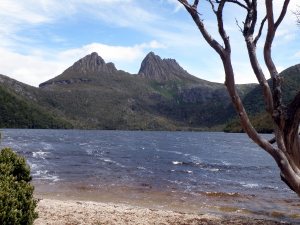
I’d like to thank Lexi for inviting me to her blog today. I know Lexi is interested in travel and sailing, so come with me on a journey to the far side of the world. To an island no bigger than Ireland, with a beauty that one would go far to surpass, empty beaches of bone, white sands, topaz seas, stunning mountains and lakes, roads you can drive down without seeing a passing car – a veritable paradise – but one that has a terrible past.

Tasmania, off the southern coast of Australia, was settled by the British in 1802. At that time, it was called Van Diemen’s Land and that name struck terror into the hearts of the thousands of men, women and children who were transported there, often for minor crimes. Take a young Irish girl during the time of the famine. She found an egg in a hedge. She was starving and placed it carefully in her apron pocket. Later she was accosted by a policeman who searched her and finding the egg, he arrested her for stealing it and despite her protestations, she was transported twelve thousand miles from her home and family.

OLYMPUS DIGITAL CAMERA

That’s not to say everyone was innocent. There were plenty of villains too. This was a time when Britain preferred to send their miscreants far away rather than have prisons. They used to send them to America but after America won its battles for independence, Britain needed another prison and they chose Australia. Terra Nullius, James Cook called it – an empty land. Only it wasn’t a land without people, not at all.

It is estimated that there were five hundred or so separate nations of native Australians who had lived there for almost fifty thousand years, each with their own language. Imagine their land invaded and their horror as they were turfed off their native hunting grounds and watched their sacred lands desecrated. On my last visit to Tasmania in October 2018 I came across this sign in the museum in Hobart.

Around that time the aboriginals were attempting to fight back and some of the new settlers were speared. The government responded by hunting down all the native Tasmanians and sending them to a smaller island where they gradually died through disease and neglect. It’s a shameful tale.

But what sparked my interest in Tasmania? It was discovering that my husband’s three times great grandparents were transported. They met there, married and raised a family. For them it was a huge success because they thrived. They had the determination, grit and endurance to survive and they helped populate Australia. It wasn’t always the case. A recent study has discovered that those convicts who had not grown up in a close family unit were the least successful. Now consider what the system did to the children of convict women, still under sentence.

A visit to the ruined Cascades Female Factory in Hobart and watching the performance ‘My story,’ tells the heart-breaking truth. The children were taken from the women to be weaned at six months. If they survived weaning, and many did not, the children were sent to the Orphan School until they could be apprenticed to a master or mistress around the age of ten, if their mothers had not claimed them. Some did, some were not in a position where they could. They may have married, and their new husbands refused to take their children. The matron of the Orphan School was the subject of a very harsh report in the 1840s. Cruelty, starvation, neglect – you get the picture. But this was thought to be better than leaving them with their ‘criminal’ mothers.

dsc01339

So many stories. Thirteen thousand women were transported to Tasmania, twenty-nine thousand to Australia in all – each have their own story. The wonderful work of the Female Convicts Research Centre volunteers in transcribing the records and following up on all the women, together with so many descendants reaching out to find the truth, is testament to our craving for knowledge of our history.

When I attended the seminar in October at the Orphan School, three separate women told me that their female ancestors had been transported from Sussex, from Boxgrove, from Oving and from Horsham. Did I know these places?

Since returning, I have thought about these three women from Sussex. I knew the story of one because I had researched all the women on her ship some years before for the FCRC. You see I was one of the volunteers. Charlotte Ayling was unusually fifty years of age, a washerwoman, sentenced in Chichester. Why unusually – because mostly they sent out young women able to marry and bear children. Charlotte was too old to take her children with her, but, and this is what strikes me now – at least one of her adult children must have loved their mother so much that they followed her out. Charlotte died only three years after arrival. I hope her son or daughter got to see her before she died.

Bio

Rosemary Noble lives in West Sussex and worked as an education librarian. Books have been her life, ever since she walked into a library at five-years-oldand found a treasure trove. Her other love is social history. She got hooked on family history before retirement and discovered so many stories that deserved tobe told.

Her first book, Search for the Light, tells the story of three young girls transported to Australia in 1824. Friendship sustains them through the horrors of the journey, and their enforced service in Tasmania. The Digger’s Daughter tells of the next generation of gold-diggers and a pioneering woman who lives almost through the first hundred years in Victoria. The third in the trilogy, Sadie’s Wars takes the reader to the fourth generation and into the twentieth century. The trilogy is based on the author’s family. It tells of secrecy and lies, of determination and grit and how all can be done or undone by luck.

Rosemary is a member of CHINDI authors and is involved in literary events in and around Chichester. She also loves to travel, especially to Australia and Europe and not least, she loves spending time with her grandchildren, one of whom is a budding author herself.

Links to Books

Search for the Light myBook.to/SearchFTL

The Digger’s Daughter myBook.to/DiggersD

Sadie’s Wars mybook.to/SadieW

Interview with Robin Bennett

I enjoyed The Hairy Hand so much, I had to have an interview with the author. His catch phrase for the book is …. ‘With great power at your fingertips, comes great trouble.’ I’m pretty sure that applies to writing for children too.

alice-achterhof-85968-unsplash

So here he is sharing his tips …

The five (and a half) rules

  1. Get rid of the parents:

Preferably they are gone for good (eaten by a tiger whilst exploring the jungle is handy because it’s dramatic, implies an adventurous family streak and is a tiny bit funny). If you can’t bear to part with mum and dad in perpetuity, they can just be at the office a lot.

  1. Fantasy needs a lot of reality

The little buggers will believe anything (to paraphrase Roald Dahl) but you have to have rules. If dragons live in space (Space Dragons), if your hero has a magic hand that can point out treasure (The Hairy Hand), if we live alongside vastly talented and immensely powerful creatures without knowing it (Small Vampires), then that’s all well and good, but children need to know what their heroes have for dinner. And(above all), why all this stuff is happening.

  1. Delete the first half of your first chapter

Seventy-seven times out of one hundred, your first thousand words are just you warming up. However much you cherished them that first morning you sat down in the spare room, their work is done. Loving is letting go. You don’t find many ten year-olds reading Faulkner or Flaubert – mainly because forty opening pages with just two full stops or a very detailed description of few streets in Rouen is dull. By way of example, for The Hairy Hand, my editor made me throw away my first two chapters and the story was much better for it. I still moaned about it, mind you.

  1. Children deserve the best of us

At the end of the day, most kids just have to go along with whatever adults decide – and that’s fair enough: we’ve paid our dues, plus we’ve got the car keys. But the one area they are in charge of is their imagination: so make sure that when you write, you write for themand not for you. Also, BE KIND: children are more fragile than they let on and more forgiving than we deserve, books are often their only friends and comfort. If you must make a child suffer in a story, be sure it is for a good reason.

5. Character is king (or queen)

Plots don’t drive a good yarn, people do and children long for interesting characters

5½.

… who they relate to (i.e., are like them)


Thanks very much for joining me Robin.

PS – Is it just me, or does everyone now want to read the missing first two chapters?? Purely out of curiosity, because the start to The Hairy Hand is brilliant so the editor was clearly right to chuck them away …

PPS – I have an exclusive Q&A with Robin in my next newsletter … if you aren’t already on my mailing list, you know what to do!


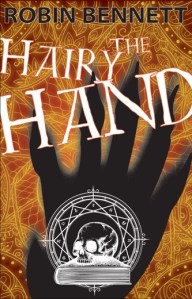
The Hairy Hand

A scary adventure for 8 -12 year olds, full of jokes, magical familiars and a Dickensian cast. When Septimus inherits a magical, treasure-finding Hairy Hand from his uncle, life suddenly becomes a lot more exciting – and dangerous!

Amazon –  https://www.amazon.co.uk/Hairy-Hand-Robin-Bennett/dp/1999884442

Author Bio

Robin Bennett is an author and entrepreneur who has written several books for children, adults, and everything in between. Listed in the Who’s Who of British Business Excellence at 29, his 2016 documentary “Fantastic Britain”, about the British obsession with fantasy and folklore, won best foreign feature at the Hollywood International Independent Documentary Awards, and his first book for young adults, Picus the Thief, won the Writer’s News Indie Published Book of the Year Award in 2012.

Twitter – https://twitter.com/MonsterBooksRaw


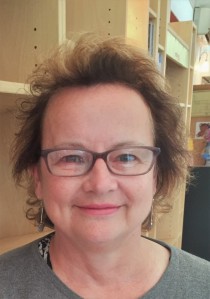
And I had to go to Wikipedia to find a picture of Robin Bennett – so apologies in advance if this is NOT what he actually looks like …


robin_bennett_author_entrepreneur

When the Twits meet Rincewind

Robin Bennett has actually created my dream comedy author combination – Roald Dahl and Terry Pratchett.

Welcome to “The Hairy Hand”. According to my astonishing memory recall, OK, according to Wikipedia, this was on the Chicken House long list in 2013.

And Septimus was previously called Octavius. It’s interesting that the name changed as I’m a huge fan of the Septimus Heap series (by Angie Sage) and did find the name a little confusing, and the two characters look annoyingly identical in my mind.

Whatever, the history, I can’t believe I had to wait five years for it to be published!

Poor Septimus has parents who are EXACTLY like The Twits, while he’s a young Rincewind. What could possibly go wrong? For good measure, add a mysterious uncle, a box with a hairy hand, and a secret book. Of course, the answer is everything. And it does.

I confess I’m puzzled that the blurb describes it as scary – it’s really not – so don’t let that put any more nervous readers off. It’s a funny adventure with some (mostly accidental) magic thrown in.

What a great way to start 2019. This is a great fun read for 8-12 year olds. There’s probably a very funny joke about five hairy hands, but that just sounds weirds, so five stars.

the hairy hand cover

The blurb

A scary adventure for 8 -12 year olds, full of jokes, magical familiars and a Dickensian cast. When Septimus inherits a magical, treasure-finding Hairy Hand from his uncle, life suddenly becomes a lot more exciting – and dangerous!

Author Bio

Robin Bennett is an author and entrepreneur who has written several books for children, adults, and everything in between. Listed in the Who’s Who of British Business Excellence at 29, his 2016 documentary “Fantastic Britain”, about the British obsession with fantasy and folklore, won best foreign feature at the Hollywood International Independent Documentary Awards, and his first book for young adults, Picus the Thief, won the Writer’s News Indie Published Book of the Year Award in 2012.

Twitter – https://twitter.com/MonsterBooksRaw

Purchase Links

Amazon –  https://www.amazon.co.uk/Hairy-Hand-Robin-Bennett/dp/1999884442


Life lessons in space

Time for a middle grade book review … and how could I not be drawn to this absolutely stunning cover? I’d put the poster up in my room any day!

Galaxygirl Cover_BevSmith_#Galaxygirl_Kindle

Voluntary alien abduction is an extreme running away from home scenario. It’s written as a series of emails, so gives a narrow first person perspective – this has pros and cons as I actually had sympathy for the single mum. Esme veers between sulky teenager, well-meaning friend, and naive child – I won’t say she reminds me of any of my nieces! I’d have liked more insights into the problems at home to support her decision to leave, but once she starts school in Kratos the story kicks into gear and from then on I raced through it.

Several themes are raised in the story. Family and friendship, regardless of background,  is central to the story. Animal rights are also cleverly explored. Serious environmental threads on global warming/ cooling and mining/ diminishing natural resources were hinted at and I really hoped they were going to be developed further.

Overall, it’s a fun read for the younger end of middle grade (7-9) raising some good topics for further discussion in an accessible way.

Giveaway – Win 2 x #galaxygirl Mugs and a signed copy of #galaxygirl (UK Only)

*Terms and Conditions –UK entries welcome.  Please enter using the Rafflecopter box below.  The winner will be selected at random via Rafflecopter from all valid entries and will be notified by Twitter and/or email. If no response is received within 7 days then I reserve the right to select an alternative winner. Open to all entrants aged 18 or over.  Any personal data given as part of the competition entry is used for this purpose only and will not be shared with third parties, with the exception of the winners’ information. This will passed to the giveaway organiser and used only for fulfilment of the prize, after which time I will delete the data.  I am not responsible for despatch or delivery of the prize.

I really want these mugs!

Galaxygirl Giveaway Prize

http://www.rafflecopter.com/rafl/display/33c69494167/?

Blurb

You hate school. Your family is beyond annoying. Your only friend comes from a different planet, and she’s about to leave.

What’s a girl to do?

Fed up with life on Earth, Esme stows away on the spaceship taking Stella back to Planet Kratos.

So begins Esme’s adventure into a world beyond the stars. A world of strange creatures, thrilling journeys, heroic rescues and instant fame.

Oh, and school. Lots of school.

Along the way she discovers that friends may be greener on the other side, but they still can’t be trusted.

Millions and billions of light years away from Earth, she sets in motion a plan to escape. Unfortunately for her, they aren’t about to let their prize exhibit leave anytime soon…


Purchase Links

UK – https://www.amazon.co.uk/galaxygirl-Bev-Smith/dp/1999311507

US – https://www.amazon.com/galaxygirl-Bev-Smith/dp/1999311507


Author Bio

Galaxygirl Author Pic

Bev Smith has been a secondary school teacher, saleswoman, waitress, wages clerk, youth worker and holiday park entertainments manager. She has scuba dived the Barrier Reef, lived in a village in Namibia, worked for a charity in Thailand, flown over Victoria Falls and paddled in the sea at Bournemouth.

Having single-parented her three daughters, she’s been ferociously playing catch up with this writing lark.  She recently completed a Masters in Writing for Children at Winchester University. #galaxygirl is her debut middle-grade book.

Social Media Links

https://twitter.com/BevSmith612

https://www.facebook.com/bevbooks/