Why our children should listen to audiobooks

I love audiobooks. I listen every day whilst dog walking or cooking. And I firmly believe that listening is “reading” and will argue this on Clubhouse until I’m blue in the face (not that anyone can see on Clubhouse). When I do school visits, I talk a lot about the author creating “mind movies”, and I would include audiobooks in this discussion.

So you may know I’m lucky enough to have the utterly amazing Chris Devon narrate my Relic Hunters series (and he’s being very patient whilst I struggle with plot holes in book 3). Anyway, for a different perspective, I recently met the talented and super lovely Charlotte Chiew (scroll down for some very funny shots of here at work) at a networking event and invited her to share some thoughts on the benefits of audiobooks for children so over to her ….

The muscles you(r children) work listening to audiobooks

I’ll admit – I only really started listening to audiobooks after I began narrating them. 

Of course, like many a good parent, I’d bought (and listened together with) my kids those read-along books with CDs that ring a little lovely chime every time the narrator had come to the end of the page and it was time to turn the page. My boys loved them. I think they felt pretty good about themselves, pretending they were able to read before they actually could decipher the words themselves. 

Then, as they got older and silently devour all sorts of books by themselves, they also started on audiobooks. I honestly can’t remember how or when, but they were the pioneer audiobook listeners in my household. I remember the first times I found the house silent, the child(ren) immobilized, headphones on, eyes glazed. And I thought, who cast this spell and how?

Obviously, I wanted this magical super power too.  

While I won’t be sharing the secrets of how I spin a spellbinding tale, I will share 2 interesting facts about audiobooks that may shed some light on how and why some audiobook narrators have listeners eating out of their hands.

1. Our brain works as hard whether we’re reading a story ourselves or listening intently to someone telling it to us.

From an evolutionary point of view, reading came after storytelling and listening, and so it uses processes in the brain that were already there from learning by listening. If you think about reading as the process of decoding the written letters, then it means that if you’ve learnt to read, the decoding is pretty much automatic which means it no longer requires much effort. The effort then, is in what you do with the information you get from the decoding (reading) or the listening (storytelling). 

(There’s been lots of scientific research on this topic, but here is where I gleamed my understanding of memory & learning http://www.danielwillingham.com/articles.html)

2. Listening to audiobooks is more engaging than watching films – even if you don’t realise it!

A study from UCL found that listening to audiobooks creates a more intense psychological and emotional reaction that watching television or film. A quick google search will bring up all the statistics and research data if that’s your cup of tea. But think about it – the results aren’t that surprising. When listening to an audiobook, you have to work your imagination so much more than when watching a film. (Remember how the latest release of that book you loved was never as satisfying as when you read it?) In addition to your imagination working hard, often times, you experience an intimate storytelling with audiobooks. A beautiful voice in your ears (thank you Noise-cancelling-headphones), drawing you into the world of the story. The narrator heightens the experience for the listener and has the ability to make an audiobook unforgettable.

The imobilised, glazed-eyed state I find my kids in when they listen to audiobooks must just be their imagination hard at work. With some help from an expert narrator…

3. Insider tips

If you’re new to audiobooks and I’ve tempted you to try, here are some options and tips for looking for great narrators:

  1. Most audiobook online retail platforms will let you trial a subscription for a month. Try Kobo, Audiobook.com and Audible – you get free book/s during your trial, which you get to keep even if you cancel your subscription. Afterwhich you’ll get credits which usually equates to 1 book every month. With a Kobo subscription, you’ll also get books on promotional prices in addition to your 1 “free” book a month. And if you accumulate more credits that you can use them, Kobo lets you”pause” your subscription if you don’t want to cancel but just haven’t finished using those credits.
  2. Check if you local library has a partnership with Libby App (by Overdrive). We are members of Lewisham Library (London) and have enjoyed many audiobooks for free on our library cards.
  3. You can get free audiobooks from Librivox, Googleplay Audiobooks, and even Apple iTunes. 
  4. Before you buy/rent/download-a-free audiobook, always check out the retail sample. That’s the equivalent of a traditional book’s “blurb”. Most audiobook producers will choose a section that will let you have a good idea of how the narrator tells the story. However, some retailers will cut their own retail sample and sometimes, that means you just hear the copyrights and opening credits…
  5. Look out for the Earphones award for the audiobook, or the Golden Voice award for the Narrator. These are awards given by AudioFile Magazine, for truly exceptional titles that excel in narrative voice and style, characterizations, suitability to audio, and enhancement of the text.

About Charlotte Chiew
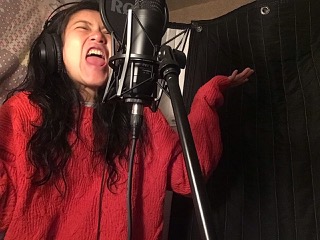
Charlotte Chiew is an audiobook narrator-producer, voiceover artist, and actor. She specializes in narrating content for young audiences and has performed for children and young audiences all over the world in theatres, community halls, festivals, shopping malls, bookshops, and on recorded medium. Charlotte is currently narrating and producing the Paramedic Chris Series– a children’s book series about the Ambulance service – by Tim Parsons.

Find out more about Charlotte’s work on https://Charlottechiew.com

Listen to Charlotte spin a yarn on the Tauk Kids’ Youtube Channel https://bit.ly/TAUKKidsYT

How to get into a writing habit (and keep it)

I must be part magpie – I love shiny new things. Unfortunately, this includes collecting shiny new writing projects. So I need help! I reviewed the first journal in this series a while ago and love the way it helps keep me from those oh-so-tempting distractions (you can about read it here). Having not quite finished Book 1, I was interested in what the next 52 weeks would look like, and how a blank journal could possibly be different! Of course, I had to ask the author what the difference would be, so here she is …

Why create a second volume of an undated journal and planner?

That’s an excellent point, and was my thought exactly when I first received a question about ‘next year’s version’. What next year’s version? It’s an undated journal and planner. Something you can buy and use over and over.

‘Right! I thought you might change the cover or something, so we don’t end up with a row of the same journals a few years from now.’

Now that I hadn’t considered. I, who wouldn’t even buy the same notebook twice…

Obviously, I could have taken the easy road after that seed was planted and simply slapped a new cover on the version I already had. That, however, isn’t how I do things (I might have to work on that at some point). So, instead of merely swapping covers, I handpicked fifty-three new writing quotes and came up with as many new writing prompts and exercises. Of course, I also gave the journal and planner a new look, because why not? (I really have to work on that not taking the easy road, don’t I?)

Without further ado, here’s the second volume of the 52 Weeks of Writing Author Journal and Planner. I hope you’ll enjoy it as much as I enjoyed creating this new version.

Mariëlle

P.S. There’s no actual order to the two volumes. If you picked this one up first, you can simply get the other one next year.

DISCOUNT!

Anyway, when I finish my current (blue journal), I’ll definitely get another. And I do love purple, so I think it will be book two. By the way, this is a hefty tome, and you need a paper copy, so it’s well worth the price. But if you want to print at home, you can purchase a printable PDF through: https://payhip.com/b/0YgJ Get 50% off until 31 March 2021 by using the coupon code 52WOW during checkout.

52 Weeks of Writing:

  • makes you plan, track, reflect on, and improve your progress and goals for an entire year;
  • helps you unravel the truth about why you aren’t where you want to be; and
  • keeps you writing through weekly thought-provoking quotes and prompts.

With this second volume of the 52 Weeks of Writing Author Journal and Planner, writing coach and writer Mariëlle S. Smith brings you the same successful strategies to craft the perfect writing practice as she did in the first journal. The only difference? Fifty-three different writing quotes and prompts and a brand-new look!

Scavenger hunt extravaganza

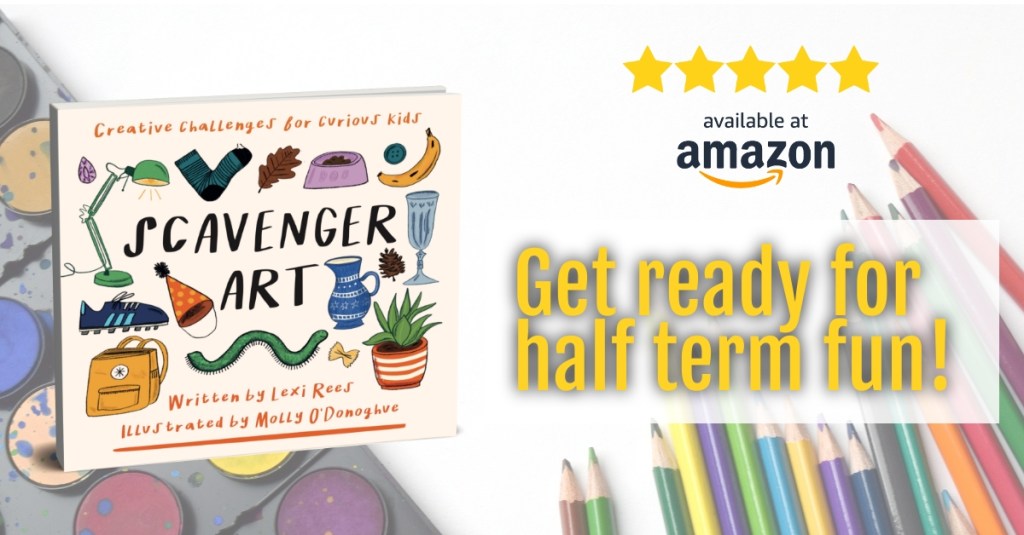
As we enter another half term in lockdown, most of us are searching for activity inspiration. Just before Christmas, my latest book, Scavenger Art was published which hopefully solves some of those “I don’t know what to do/ draw” cries. I’ve been thrilled with all the amazing reviews from parents, teachers, mindfulness coaches, and young artists. And was delighted to see it included in this article, originally published on Kickstarterz and shared with their permission, so here you go …

There are so many different variations and themes you could adopt to create a fun and exciting scavenger hunt. The best thing about them is children absolutely love them. From colour to themed scavenger hunts, the possibilities are endless. Below are some of our favourite variations of different scavenger hunt ideas you could do, or get creative and invent your own. (We would love to hear your favourite).

  • Colour – By using colour in the hunt, young children have the opportunity to learn about colours and for older children it’s an exciting challenge to find such a colourful mix of items. Why not create a rainbow scavenger hunt, where children have to find items the colour of the rainbow

clolour scavenger hunt

  • Letters – Finding items beginning with certain letters is another fun and challenging hunt we can use. Why not have your child find items that spell their name, football team, pet name etc. Whatever their age or ability this one is a fantastic way to enhance learning and fun.
  • Treasure Hunt – Get creative and draw a map of your house/garden and put clues to the location of the treasureyou want your children to find. Items could include, favourite toy, teddy bear, real or chocolate coins.
  • Team Hunt – More than 1 child? Then why not create team games and see who can find items on the list first. If not you could always have parent vs child hunts were you can create a list for each other, say 7 items each and see who can find all the items the fastest.
  • Theme – There are so many themes you could include to make your scavenger hunt feel more topical and relevant. Such as seasonal (things found in spring, autumn etc), football themed, superhero and senses (things you can smell, for example).
  • Art/Mindfulness – A great activity we came across was the mixing of drawing and a scavenger hunt, creating Scavenger art. Perfect for children and families alike, with so many great skills acquired, such as creativity, mindfulness and developing drawing skills.

One book we came across was a perfect recourse for this different kind of hunt, and can be found here. With 52 scavenger hunt ideas in, it’s a perfect companion to any scavenger hunt.

Scavenger art
Scavenger Art, Lexi Rees

Review

“What a wonderful book! It’s easily accessible and adaptable for any circumstances, age, or even weather. An ideal present, this fun book would be appreciated by any child who loves to draw. Invaluable for both parents and educators, there are hours of enjoyment to be had within its pages.” Art teacher

So there you have it, a basic list of ideas to get you started for a scavenger hunt for kids and parents alike. 

Why we should insist children read – guest blog by Arabella Northey

I was chatting (on Zoom) with Arabella Northey from Metaprep. After over fifteen years working in both the state and private schools sector, Arabella knows her stuff. As a founder of The Fulham Boys School, she developed a curriculum to equip and challenge boys of all abilities and foster a love of learning. Whilst at Wetherby Prep she successfully prepared pupils for both entry exams and scholarships to a wide range of day and boarding schools. Arabella then moved to Fulham Senior where, as Deputy Head, she developed and oversaw the implementation of the curriculum as well as the entry and interview process for both 11+ and 13+. Having completed her National Professional Qualification for Headship (NPQH) Arabella decided to combine her interests in progressive education and leadership with technology and found Meta Prep.

I invited her to share her thoughts on why reading is critical and how, in the quest to become an independent thinker and use your experiences and current knowledge to address new situations, a book is a great way to start, so over to her …

Years of teaching, particularly English, often involved great conversations with parents about our love of literature or the best books to read at the moment. Sadly, for some children their heart would sink as they were invited to choose a book from the library and spend five minutes in silence. I am a self-confessed voracious reader who would quite happily sink into a hammock for a day with a good book. Admittedly, I spent the first days in Lockdown 1.0 going through the list of Carnegie Medal winners pre-1976, comfort reading at its height! Reading Lucy Mangan’s ‘Bookworm’ gave me an excuse to relive old favourites from Shirley Hughes to Enid Blyton and on to Willard Price.

You probably have not left a parent’s evening without a teacher mentioning the importance of reading. So why is there this insistence on getting children reading? Encouraging them to pick up a book and sail away to a foreign land is the mission. What do they find when they get there? How does it make them feel? What are they thinking? 

Our message at Meta Prep is about becoming an independent thinker and using your experiences and current knowledge to address new situations; a book is a great way to start.

Good to read

Reading together is always important

Reading allows children to discover new worlds, meet new people and learn about the past. It develops empathy and critical thinking. At a time when many children are deprived of social contact, a book is a great way to help them connect with ‘others’ and help them prepare for the return to the classroom. 

One of my favourite bumper stickers is ‘there is no app to replace your lap, read to your child.’ I would reiterate that there is no magic age to stop reading with and to your child. A parent reading to their child can unlock complicated prose that opens a previously closed door. As little as 10 mins a day can make all the difference. 

Reading increases vocabulary, improves spelling and can help with punctuation! It is an essential part of life and opens deeper learning in the classroom. The best part is it develops the ability to reflect, which is often the weakest part of the learning process. As metacognitive learners, being able to reflect on their learning is key.

Barriers

Variety and options is key for children

For many children, particularly boys as they pass into secondary school, reading can seem to be seen as some kind of secret code understood only by teachers and women. Feeling alienated is so easy and the quickest way to turn a child away from reading. If they think that everyone is getting meaning from a book and to them it just stinks, it feeds into their insecurities and they will run away screaming from the problem. 

We need to demystify the whole process and make it engaging and enthusing. It should not always be about the need to increase vocabulary etc, but about finding the sweet spot: where interest meets confidence. If you have a child that is passionate about football or drama, then find a book or non-fiction title within their reading range that will entice them to read. 

Start the book with them, make it a joint adventure of discovery, and remember that your tastes are not their tastes. It could be comics, graphic novels, audiobooks, the sports pages or magazines; fluency and challenge can come later.

Reading age

Many schools use a variety of assessments to judge the reading age of a child. A reading age refers to a child’s ability in relation to the average age of comparable ability.  Many textbooks require a certain level of reading ability for children to be able to read and understand them. The reading age goes up as fluency increases and that will be as a result of practice. Daily reading with you and in school has immense power to lift their literacy skills opening up a host of knowledge, understanding, interests and enjoyment. At Meta Prep, preparing children for the 11+ is a challenge as every question uses complex and nuanced language; it requires impressive comprehension skills before they even tackle the answer.

We want children to read for pleasure and, like everything in life, we need to sprinkle the trail with breadcrumbs to show them the way.

Thank you Arabella, I couldn’t agree more!

Why authors need to use social media, and Clubhouse!

If you’ve followed me a while, you’ll know I’m pretty chatty on social media. Anyway, I’ve followed Lizzie Chantree for several years now having initially stumbled across her when she was doing the launch for “Ninja School Mum“. That book was literally EVERYWHERE I turned on social media! Of course I read it, so clearly the marketing campaign worked. Naturally, when I heard she was publishing “Networking for Writers” I was first in line.

My initial thought was that it’s a pretty slim volume at 98 pages, but each chapter is densely packed and hits you over the head with information. If you’re new to life as a published author, or unsure on social media and some other marketing opportunities, this is a helpful guide which you could use along with the essential BadRedHead Media 30 Day Book Marketing Challenge.

Chapters cover the various social media sites, and other tools that authors can use. I found it very interesting to see that she starts with Twitter. It’s words, so the fit for a writer is obvious. Personally, I’ve found a huge, positive, and supportive, writer community there, as well as many readers. I love Twitter, and agree with everything she suggests in the chapter. I’ve always resisted Pinterest, but having read her tips, you might see me popping up there too.

One issue with writing a book about social media platforms, is new ones keep on popping up. So far I’ve completely dodged TikTok, but was a little disappointed to see it didn’t feature as I’ve heard some writers suggest they have had great success on it.

In my opinion, the bigger gap is Clubhouse. To be fair, this probably wasn’t even in existence when Lizzie sent her book to print, but it definitely merits a new edition of her book. I wonder if this will be the fastest ever second edition release? If you haven’t come across Clubhouse yet, it’s a voice based app that is basically a live chat show where you can pop into rooms and hear an amazing range of speakers and join in. In your pyjamas and without brushing your hair. A total win for me! I said I love Twitter, but I LOVE LOVE LOVE Clubhouse. If you’re not on and you get a chance of an invite, grab it. I’ve been on a while and have taken part in shared writing sprints, joined book club chats, hosted Q&A sessions, and visited a whole heap of other interesting rooms. While you’re there, say hi – I’m @lexirees.

The Blurb

Networking for writers book cover

Are you swamped with book marketing and looking for a way to find new sales? Learn simple and effective networking techniques, to grow your readership and connect with other authors and book lovers, today!

Whether you are a new or experienced writer, self-published or traditionally published, this book will show you how to grow your readership and author network, through some of the most powerful of all marketing tools – word of mouth and recommendation.  

This book will show you:

  • How networking can help you sell more books.
  • Why author branding is important.
  • How networking hours work.
  • Specific Facebook groups for writers
  • How to utilise social media to grow your readership.
  • How not to waste valuable writing time.
  • How to make our marketing more effective.

Throughout Networking for Writers, we will explore running or attending book signings, hosting seminars, finding a writing buddy or mentor, author networking groups, social media planning and so much more. 

Purchase Link – viewbook.at/NetworkingForWriters

Author bio

Lizzie Chantree author image

International bestselling author and award-winning inventor, Lizzie Chantree, started her own business at the age of 18 and became one of Fair Play London and The Patent Office’s British Female Inventors of the Year in 2000. She discovered her love of writing fiction when her children were little and now works as a business mentor and runs a popular networking hour on social media, where creatives can support to each other. She writes books full of friendship and laughter, that are about women with unusual and adventurous businesses, who are far stronger than they realise. She lives with her family on the coast in Essex.