Why we should insist children read – guest blog by Arabella Northey

I was chatting (on Zoom) with Arabella Northey from Metaprep. After over fifteen years working in both the state and private schools sector, Arabella knows her stuff. As a founder of The Fulham Boys School, she developed a curriculum to equip and challenge boys of all abilities and foster a love of learning. Whilst at Wetherby Prep she successfully prepared pupils for both entry exams and scholarships to a wide range of day and boarding schools. Arabella then moved to Fulham Senior where, as Deputy Head, she developed and oversaw the implementation of the curriculum as well as the entry and interview process for both 11+ and 13+. Having completed her National Professional Qualification for Headship (NPQH) Arabella decided to combine her interests in progressive education and leadership with technology and found Meta Prep.

I invited her to share her thoughts on why reading is critical and how, in the quest to become an independent thinker and use your experiences and current knowledge to address new situations, a book is a great way to start, so over to her …

Years of teaching, particularly English, often involved great conversations with parents about our love of literature or the best books to read at the moment. Sadly, for some children their heart would sink as they were invited to choose a book from the library and spend five minutes in silence. I am a self-confessed voracious reader who would quite happily sink into a hammock for a day with a good book. Admittedly, I spent the first days in Lockdown 1.0 going through the list of Carnegie Medal winners pre-1976, comfort reading at its height! Reading Lucy Mangan’s ‘Bookworm’ gave me an excuse to relive old favourites from Shirley Hughes to Enid Blyton and on to Willard Price.

You probably have not left a parent’s evening without a teacher mentioning the importance of reading. So why is there this insistence on getting children reading? Encouraging them to pick up a book and sail away to a foreign land is the mission. What do they find when they get there? How does it make them feel? What are they thinking? 

Our message at Meta Prep is about becoming an independent thinker and using your experiences and current knowledge to address new situations; a book is a great way to start.

Good to read

Reading together is always important

Reading allows children to discover new worlds, meet new people and learn about the past. It develops empathy and critical thinking. At a time when many children are deprived of social contact, a book is a great way to help them connect with ‘others’ and help them prepare for the return to the classroom. 

One of my favourite bumper stickers is ‘there is no app to replace your lap, read to your child.’ I would reiterate that there is no magic age to stop reading with and to your child. A parent reading to their child can unlock complicated prose that opens a previously closed door. As little as 10 mins a day can make all the difference. 

Reading increases vocabulary, improves spelling and can help with punctuation! It is an essential part of life and opens deeper learning in the classroom. The best part is it develops the ability to reflect, which is often the weakest part of the learning process. As metacognitive learners, being able to reflect on their learning is key.

Barriers

Variety and options is key for children

For many children, particularly boys as they pass into secondary school, reading can seem to be seen as some kind of secret code understood only by teachers and women. Feeling alienated is so easy and the quickest way to turn a child away from reading. If they think that everyone is getting meaning from a book and to them it just stinks, it feeds into their insecurities and they will run away screaming from the problem. 

We need to demystify the whole process and make it engaging and enthusing. It should not always be about the need to increase vocabulary etc, but about finding the sweet spot: where interest meets confidence. If you have a child that is passionate about football or drama, then find a book or non-fiction title within their reading range that will entice them to read. 

Start the book with them, make it a joint adventure of discovery, and remember that your tastes are not their tastes. It could be comics, graphic novels, audiobooks, the sports pages or magazines; fluency and challenge can come later.

Reading age

Many schools use a variety of assessments to judge the reading age of a child. A reading age refers to a child’s ability in relation to the average age of comparable ability.  Many textbooks require a certain level of reading ability for children to be able to read and understand them. The reading age goes up as fluency increases and that will be as a result of practice. Daily reading with you and in school has immense power to lift their literacy skills opening up a host of knowledge, understanding, interests and enjoyment. At Meta Prep, preparing children for the 11+ is a challenge as every question uses complex and nuanced language; it requires impressive comprehension skills before they even tackle the answer.

We want children to read for pleasure and, like everything in life, we need to sprinkle the trail with breadcrumbs to show them the way.

Thank you Arabella, I couldn’t agree more!

Why authors need to use social media, and Clubhouse!

If you’ve followed me a while, you’ll know I’m pretty chatty on social media. Anyway, I’ve followed Lizzie Chantree for several years now having initially stumbled across her when she was doing the launch for “Ninja School Mum“. That book was literally EVERYWHERE I turned on social media! Of course I read it, so clearly the marketing campaign worked. Naturally, when I heard she was publishing “Networking for Writers” I was first in line.

My initial thought was that it’s a pretty slim volume at 98 pages, but each chapter is densely packed and hits you over the head with information. If you’re new to life as a published author, or unsure on social media and some other marketing opportunities, this is a helpful guide which you could use along with the essential BadRedHead Media 30 Day Book Marketing Challenge.

Chapters cover the various social media sites, and other tools that authors can use. I found it very interesting to see that she starts with Twitter. It’s words, so the fit for a writer is obvious. Personally, I’ve found a huge, positive, and supportive, writer community there, as well as many readers. I love Twitter, and agree with everything she suggests in the chapter. I’ve always resisted Pinterest, but having read her tips, you might see me popping up there too.

One issue with writing a book about social media platforms, is new ones keep on popping up. So far I’ve completely dodged TikTok, but was a little disappointed to see it didn’t feature as I’ve heard some writers suggest they have had great success on it.

In my opinion, the bigger gap is Clubhouse. To be fair, this probably wasn’t even in existence when Lizzie sent her book to print, but it definitely merits a new edition of her book. I wonder if this will be the fastest ever second edition release? If you haven’t come across Clubhouse yet, it’s a voice based app that is basically a live chat show where you can pop into rooms and hear an amazing range of speakers and join in. In your pyjamas and without brushing your hair. A total win for me! I said I love Twitter, but I LOVE LOVE LOVE Clubhouse. If you’re not on and you get a chance of an invite, grab it. I’ve been on a while and have taken part in shared writing sprints, joined book club chats, hosted Q&A sessions, and visited a whole heap of other interesting rooms. While you’re there, say hi – I’m @lexirees.

The Blurb

Networking for writers book cover

Are you swamped with book marketing and looking for a way to find new sales? Learn simple and effective networking techniques, to grow your readership and connect with other authors and book lovers, today!

Whether you are a new or experienced writer, self-published or traditionally published, this book will show you how to grow your readership and author network, through some of the most powerful of all marketing tools – word of mouth and recommendation.  

This book will show you:

  • How networking can help you sell more books.
  • Why author branding is important.
  • How networking hours work.
  • Specific Facebook groups for writers
  • How to utilise social media to grow your readership.
  • How not to waste valuable writing time.
  • How to make our marketing more effective.

Throughout Networking for Writers, we will explore running or attending book signings, hosting seminars, finding a writing buddy or mentor, author networking groups, social media planning and so much more. 

Purchase Link – viewbook.at/NetworkingForWriters

Author bio

Lizzie Chantree author image

International bestselling author and award-winning inventor, Lizzie Chantree, started her own business at the age of 18 and became one of Fair Play London and The Patent Office’s British Female Inventors of the Year in 2000. She discovered her love of writing fiction when her children were little and now works as a business mentor and runs a popular networking hour on social media, where creatives can support to each other. She writes books full of friendship and laughter, that are about women with unusual and adventurous businesses, who are far stronger than they realise. She lives with her family on the coast in Essex. 

The joy of editing, and an amazing competition

When I do author talks in schools, I always spend a chunk of time talking about editing. I know it’s a popular topic for the teachers as it’s something they can refer back to in subsequent lessons (“Remember how Lexi talked about the importance of editing your work?”). It’s also useful for them to be able to discuss it with the pupil who is absolutely adamant that their first draft is flawless, perfect in every way, how long I spend on the editing phase before publication.

I usually start by asking them to define editing. Most of the pupils leap straight to the grammar, spelling, and punctuation stage, which sets the scene for a discussion around developmental edits (looking at the big-picture), structural edits (looking at the structure of the story), line edits, copy edits (the bit the kids initially latch onto), and finally proof reading.

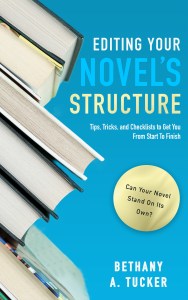
Some authors struggle with the editing phase, but personally I enjoy it. Editing Your Novel’s Structure: Tips, Tricks, and Checklists to Get You From Start to Finish is a concise guide to the structural editing phase and, whilst there is absolutely no substitute for a professional edit, it’s always good to do a thorough run through yourself to catch as many issues as you can.

Book cover image

The checklists are particularly handy. For example, the one on settings has a very comprehensive 18 separate points! For this reason I prefer a paperback rather than ebook so I can flick through quickly, cover it in post-it notes, and annotate heavily, but that’s partly because I’m an old-school hard-copy girl. I also love the way it covers a wide variety of genres so it has prompts regardless of whether you are writing historical fiction or sci-fi.

I’m actually reading two books on the writing process at the moment, and they couldn’t be more different. This one is blunt and to the point (lots of “you must” rules). The other is a lyrical, philosophical approach. If you’re serious about improving your writing craft, I would recommend you consume as many different approaches as possible as everyone has different issues, and different aspects will resonate with the issues you personally grapple with.

Competition

As part of todays blog blitz, I’m ridiculously excited to be hosting this competition to win an introductory editing service, The First Five PackageEntries close on Sunday night, so don’t hang around! Enter here …..

https://kingsumo.com/g/xcysrh/win-an-editing-package-worth-150

Here’s a description of the service: https://theartandscienceofwords.com/thefirstfivepackage/ It’s worth $150. I wish I could enter myself!! #win #editing 

Blurb

Editing Your Novel’s Structure: Tips, Tricks, and Checklists to Get You From Start to Finish

Before it’s time to check for commas and iron out passive voice, fiction writers need to know that their story is strong. Are your beta readers not finishing? Do they have multiple, conflicting complaints? When you ask them questions about how they experience your story, do they give lukewarm responses? Or have you not even asked anyone to read your story, wondering if it’s ready?

If any of the above is true, you may need to refine the structure of your story. What is structure you ask?  Structure is what holds a story together. Does the character arc entrance the reader? Is the world building comprehensive and believable? These questions and more have to be answered by all of us as we turn our drafts into books. 

In this concise handbook, complete with checklists for each section, let a veteran writer walk you through the process of self-assessing your novel, from characters to pacing with lots of compassion and a dash of humor. In easy to follow directions and using adaptable strategies, she shows you how to check yourself for plot holes, settle timeline confusion, and snap character arcs into place. 

Use this handbook for quick help and quick self-editing checklists on:

– Characters and Character Arcs.
– Plot.
– Backstory.
– Point of View.
– A detailed explanation of nearly free self-editing tools and how to apply them to your book to find your own structural problems.
– Beginnings and Ends.
– Editing for sensitive and specialized subject matter.
– Helpful tips on choosing beta readers, when to seek an editor, and a sample questionnaire to give to your first readers. 

Grab your copy of Edit Your Novel’s Structure today! Now is the time to finish that draft and get your story out into the world.

Author bio

Bethany Tucker is an author and editor located near Seattle, U.S.A. Story has always been a part of her life. With over twenty years of writing and teaching experience, she’s more than ready to take your hand and pull back the curtain on writing craft and mindset. Last year she edited over a million words for aspiring authors. Her YA fantasy series Adelaide is published wide under the pen name Mustang Rabbit and her dark epic fantasy is releasing in 2021 under Ciara Darren. You can find more about her services for authors at TheArtandScienceofWords.com. 

Author photo

Here’s to more fun in ’21

Christmas may be cancelled, but at least we’ve almost made it to the end of 2020. Congratulations! It’s been a particularly challenging year. I know each of us has had different experiences, and different stresses, whether we’re key workers, home educators, shielding ourselves or our loved ones, furloughed, seen our businesses closed for months on end… I can’t be the only person with a whole lot more grey hair now. Having only been to the hairdresser twice this year, if I hadn’t discovered my husband was actually quite handy with a bottle of hair dye, it would be a lot more obvious!

Anyway, here’s to a more fun filled 2021.

Whatever else 2021 brings, let’s fill it with books!

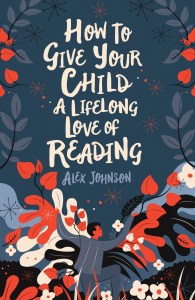
I wasn’t sure what book to wrap up the year with, but Alex Johnson has solved my problem! He has an eclectic range of books out with several quirky treats (e.g. The Book of Book Lists). Anyway, he has a new one out published by the British Library which ticks the boxes for my book club and parent hats, and I love the cover.

I asked him to join me for a chat.

What I remember about reading as a child is as much the pleasurable experience of it as the actual books. So while I have fond recollections of Noggin the Nog, Mumfie, Tintin, and Mr Rabbit and the Lovely Present, what is just as strong is the emotional memory of reading in bed (especially – cliché klaxon – under the covers with a torch), in the garden, on holiday, and especially being read to by my parents.

The only real rule about encouraging your children to read – and now that we’re going back into lockdown there will be even more time for doing so – is that it should be enjoyable. However you plan to encourage them, the most important thing is that reading doesn’t become a chore or, even worse, some kind of punishment. “Get off that Xbox and read a good book” is unlikely to lead to success.

Children turn into readers when they find a book they like, and as soon as books make them feel happy, they’re hooked for life. This means encouraging them however they read. Are they rereading an old favourite for the billionth time? Smashing, rereading is not only a key part of understanding a book but it’s also comforting. Are they engrossed in a Dandy annual? Great, reading comics/graphic novels is great fun – my youngest boy spent a large amount of the first lockdown alternating between Philip Pullman’s Northern Lights trilogy and my 1980s Tiger & Scorcher annuals. One is not better than the other. 

Having said that, don’t keep encouraging them to read something you loved as a child if they’re not keen. Guide and suggest, but as far as possible, let them make the choice themselves. I (still) love Anthony Buckeridge’s series of books about the schoolboy Jennings (less magical than Harry Potter, less mischievous than William Brown). My three children swiftly decided against. That’s absolutely fine.

An important way to keep children reading is to encourage them to read all kinds of things. So whether it’s a novel or a poem, a history book or a science guide, a travelogue or a comic, diaries or jokes, a biography or a picture book, variety is the spice of reading life. Although library visits are down on last year for obvious reasons, think about using e-lending services which have seen a massive rise in use in 2020. As well as ‘traditional’ books, ebooks are well worth considering. There’s a lot to explore online too. For example, try Poetryline run by the Centre for Literacy in Primary Education at clpe.org.uk/poetryline or search for the work of performance poets such as Kate Tempest and Caleb Femi.

And don’t forget that audiobooks are books too. People not only learn in different styles but they also enjoy stories in different ways. Traditional books don’t suit everybody and audiobooks should certainly not be seen as some kind of fraudulent replacement for a ‘worthy’ hardback in the hand. Storytelling, after all, is far older than reading a printed book.The biggest commercial player in the audiobook market is Audible, owned by Amazon, but do search out other options too such as Listening Books (www.listening-books.org.uk).

As I mentioned above, one of the nicest ways of encouraging your child to read is to do it together and read to them. This is important to do when times are normal, but now everybody is unsettled this is a particularly excellent way of comforting your child. You absolutely don’t have to be a professional actor to read out loud, but do put plenty of emotion into it (I’ve always rather enjoyed doing ‘voices’ even though they are often rather mixed up – my sons gleefully pointed out that the dwarves in The Hobbit appeared to change which part of the country they came from every other reading session) and don’t go too fast – everybody tends to read too quickly. Older children who have not been read to for a while might also now enjoy this again.

As well as reading, it’s good to discuss the books your child is reading. Chatting about books is a huge part of the reading experience and enjoyable for both you and your child. Ask questions which make them think about what they’re reading or encourage them to look for answers in another book, rather than simply lobbing information at them (but remember they’re not doing a school test on it so don’t turn it into an interrogation!). If you’re reading something together, don’t whizz through it as fast as possible, but pause regularly to discuss issues that it raises and connections to other books your child may have read. Think of yourself as a ‘reading mentor’ rather than a broadcaster.

Lastly, don’t let your child have all the fun. You should read too. Not only is it enjoyable, if your son or daughter sees you reading then they are much more likely to follow your lead.

Thanks Alex!

Parent/ teacher alert

You can get your book wall off to a nice start in January as Alex has offered to send a personalised postcard to anyone who shares a picture of them with their copy of his book on social media and tags me. [UK only – sorry]

Before I log off now until the new year, I want to wish you all a very happy holidays, stay safe, take care, and see you in 2021!

There’s never been a better time to start writing!

Hands up, how many of you are looking at self-isolation and thinking, “I’m actually going to write that book“? We’ve also got Camp Nano coming up in April (a wonderful supportive writers community), so, if I may set aside all the worries and difficulties, perhaps there has never been a better time to pick up your pen. I love a journal, and use a student planner myself because as a kids author that aligns with my planning. This journal is more focussed on creating a strong writing habit, giving you a clear structure and prompts to keep you going and I absolutely LOVE it. It’s a big beast (400 odd pages), so don’t be tempted to get a soft copy – you’re definitely going to need a printed version.

52 Weeks of Writing Author Journal and Planner

Are you ready to become the writer you were always meant to be? 52 Weeks of Writing will get you cracking by making you plan, track, reflect on, and check in with your progress and goals an entire year long. It will help you dig deep by offering questions and writing prompts designed to unravel whatever truths about your writing you’re ready for, and keep you inspired by delivering a thought-provoking writing quote every week. 

  • Do you struggle with setting goals that reflect your daily reality? 
  • Do you want to practise breaking goals down into manageable chunks? 
  • Would you like more insight into your writing habit(s) and figure out why you keep getting in your own way? 
  • And do you want to create a sustainable writing practice that honours your needs and desires as a writer? 

Then the 52 Weeks of Writing: Author Journal and Planner is for you. This book brings together every lesson Mariëlle S. Smith has learned as a writing coach and writer. Wary as she is of comparisonitis and unhealthy competition, this author journal and planner was designed to help writers develop and fine-tune a practice that works for them. If you’re ready to get out of your own way and become the writer you’re meant to be, pick up your copy of today. 

Competition time!

  • If that sounds good, wait until you see these prizes – Enter here! https://mswordsmith.nl/en_GB/giveaway/
  • THREE paperback copies of the 52 Weeks of Writing Author Journal and Planner,
  • TWO paperback copies of Tarot for Creatives: 21 Tarot Spreads to (Re)Connect to Your Intuition and Ignite That Creative Spark, and
  • ONE coaching session.

Author Bio

Mariëlle S. Smith is a coach for writers and other creatives, an editor, (ghost) writer, and custom retreat organiser. In 2019, she moved to Cyprus, and island in the Mediterranean Sea, where she organises private writer’s retreats, is inspired 24/7, and feeds more stray cats than she can count.