Why writing is like coffee.

As you know, I do lots of school visits. And one of the questions I’m often asked (along with the random qs like “What’s your least favourite food?” – it’s custard if you’re curious), is about my writing process from idea generation to finished book. And, like the kids I meet, I’m really nosy about the writing process for other writers. Get a group of authors together and conversation is sure to turn at some point to the big debate: are you a plotter or an pantser. Which is why I read so many writing books. Anyway, today, I have Bonni Goldberg with me, author of The Write Balance: How to Embrace Percolation, Revision & Going Public. So here she is …
I’m especially delighted to be here on Mum’s Book Blast because it speaks to my own identities: I’m a mum, a writer and my debut picture book is coming out in Fall, 2023. I’m even part of a FB group especially for mums who write. I see a lot of overlap between my Mum Self, my Writing Self. Much like being a mum, being a writer is a joy and an endless series of negotiations to achieve balance. And when I say balance here, I don’t mean all at one time, like two sides of a scale. In The Write Balance, it’s about not neglecting time and attention to, or creating a hierarchy from, each aspect of being a writer, especially percolation, revision, and going public.  Percolation is everything that takes place before you put ideas into written words. I know so many writers that judge themselves harshly as “not writing” when they’re percolating. They say, it doesn’t count as writing if I don’t put out words. But with a slight shift in perspective, it becomes clear that there are no written words without percolating first:

(from The Write Balance pp. 14-15)

However you do it, the point of percolation is to let the little cells of the idea gather, divide, and multiply in order to sustain life and energy outside of your thoughts, to coalesce into something that isn’t crushed by written words or blown away by your busy mind. Once the idea has introduced itself, but before you decide to explore it in writing, it needs to take hold and brew in your body and psyche. Something new has stimulated your system. It’s full of the potential to grow into a life separate from you. Like any seed, if the idea is forced into the light of day too soon by impatience or expectations, it shrivels. I’ve lost pieces because I’ve confused inspiration with ripeness, because I was afraid I’d forget the idea if I didn’t get it all down right away, because I made keeping to my writing schedule more important than the writing. It took me a long time to learn that keeping an idea inside for a while helps me to slow down, adjust my expectations, and respect my ideas. 

Edna O’Brien once said, “Writing is like carrying a fetus.” Just as a fetus first grows amphibian-like gills and a tail before it takes its final human form, so a piece of writing first needs to develop into a pre-written state in the world of the psyche. Percolation is the incubation time, but there’s no standard gestation period like nine months for a human baby or twenty-one days for a chick. You can’t predict that it will take six weeks for a short story to grow or twelve minutes for a poem. You might percolate for ten minutes or ten years. One of your Writing Self’s roles is to live with your ideas, get to know them, and intuit when they are ready to see the light of words. 

One way you can tell an idea is growing is that you notice other events or images in the world or in your memory that connect to your maturing idea. When I was living purely with the idea of writing an essay about making borscht, I saw a relationship between me scavenging my fridge for the ingredients and a mouse in my kitchen foraging for crumbs. That connection ultimately affected the tone of my piece.

Back to me.

This is EXACTLY what I say to the kids when they ask me about my process. I let ideas percolate. Actually I use the word “fester”. But given my caffeine addiction, they are probably percolating. I tell them that some ideas fester for ages, for example, I still want to write a story about a lighthouse, but it’s been on my list for about 3 years now. Almost as long as my friend has had “Grout bathroom” on her list.

Anyway, if you’re interested, here is more info on the book.

Blurb

Bonni Goldberg’s The Write Balance introduces you to alternative perspectives and motivation for lasting creative fulfillment. This companion book to the beloved bestseller, Room to Write is filled with encouragement, tools, examples and exercises.

Through years of teaching writing in workshops and in classrooms, Bonni has seen that the writers who are most passionate and grounded in their Writing Self embrace three aspects of the writing process: nurturing ideas, revising to best communicate those ideas, and completing the writing cycle by going public.

In this powerful guide, Bonni invites you to explore these creative stages which are essential to satisfying your Writing Self.

Use The Write Balance to:

  • Find Fulfillment as a Writer
  • Explore Creative Writing
  • Add to Your Writer’s Toolbox for Perspective
  • Overcome Writer’s Block
  • Teach Creative Writing
  • Inspire Your Writing Group
  • Give as Gifts to the Writers in Your Life

About the author

Bonni Goldberg is the author of The Write Balance: How to Embrace Percolation, Revision & Going Public, the companion book to the best-seller Room to Write: Daily Invitations to a Writer’s Life. Bonni is an award-winning poet and writer. She is the creator of the 2 Minute Journals™ series. Both traditionally and indie published, her books include non-fiction for adults and fiction and non-fiction for young readers. Her essays and blog posts can be found in numerous print and online publications.

Bonni teaches creative writing at colleges and leads writing workshops internationally for all ages. She knows everyone is creative, and she supports people to discover and share their authentic, meaningful and imaginative experiences through words. Whether through her writings or through teaching, her methods and perspectives continue to empower thousands of adults, families, and children.

Bonni is also a Jewish educator. She speaks, writes, and leads workshops on Jewish topics such as Jewish identity, rituals and antisemitism at Jewish women’s events, JCCs, and conferences. 

Bonni Goldberg lives in Portland, Oregon with her partner in life, and some creative projects, artist Geo Kendall.
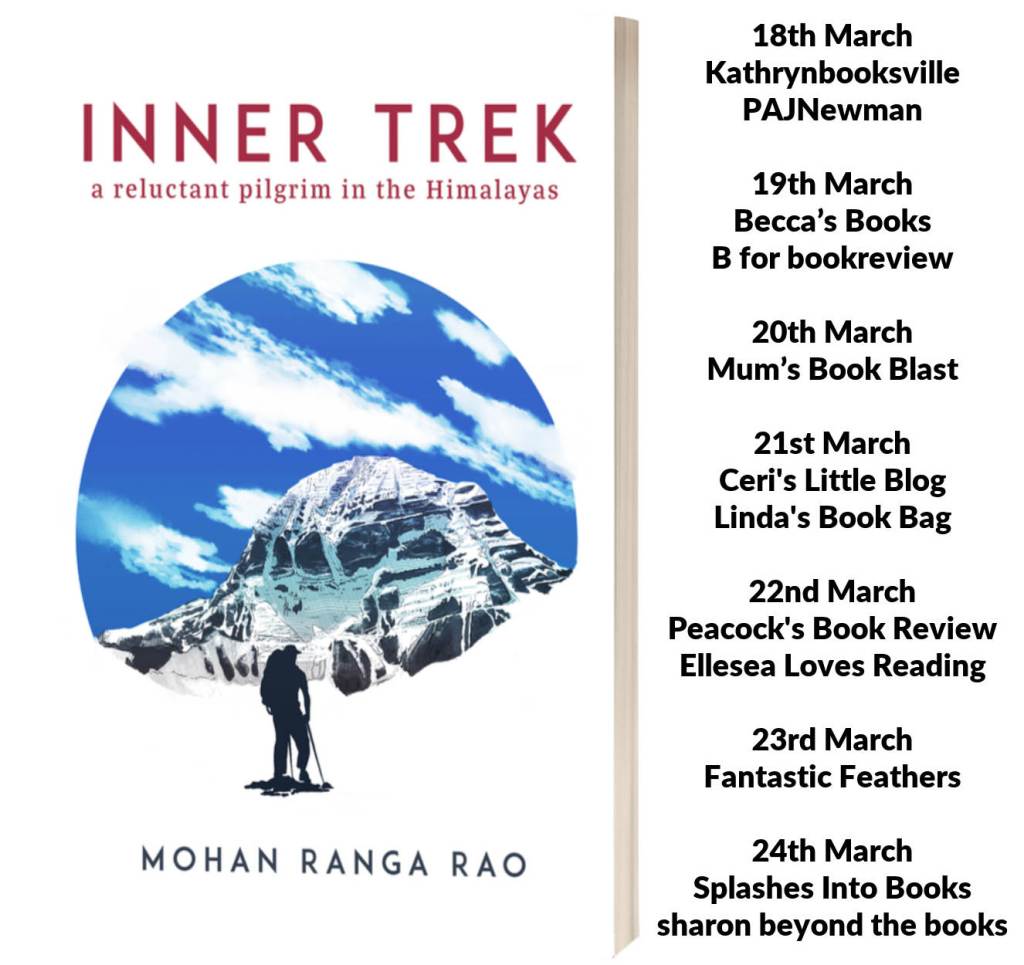
A modern day pilgrimage

You might have already spotted that this is not a kids book, but every now and then I sneak in a non-fiction book that inspires me as a writer and/or mum.

I love travel books and am going through a phase of reading extreme adventure travel books, but my gentle rambles always feel rather tame by comparison, so I was drawn to an Inner Trek: A Reluctant Pilgrim in the Himalayas and the idea of a businessman with no particular action credentials setting off on a pilgrimage. And as I recently published a kids book on mindfulness (BElieve in YOUrself) and the sequel is out soon, the contemplative aspect also caught my attention. From the blurb, I did wonder if the author might be a bit too introspective or self-absorbed for me, but I shouldn’t have worried. I was totally drawn in to his story from the very start with the “inciting incident” (the writer in me always looks for the trigger for any story, fact or fiction). And I loved the conversations with his wife – it all felt so authentic. It’s different to anything I’ve read before, and well-worth looking at, even if it’s not your usual genre.

Blurb

After being threatened by a Bangalore mob boss, retired Indian businessman in Mohan Ranga Rao makes a vow: if he somehow gets out of the situation, he will thank the gods by going on Kailash Mansarova, a holy mountain pilgrimage in Tibet. What starts out as merely a challenging high-altitude trek soon becomes a life-changing adventure. With a blend of humor, honesty and keen insight, Mohan journeys toward a deeper understanding of the world around him.

A memoir of a road less traveled and a true story of self-discovery at 18,000 feet.

Author Bio

Mohan Ranga Rao is an accomplished businessman, an avid traveller and a generous philanthropist. He has visited over thirty different countries and is drawn to places of natural beauty and physically-challenging trails. Mohan lives in Mysore with his wife Mamatha. They have two adult children. He plays tennis daily, takes frequent hikes and reads anything from scotch labels to quantum physics to Vedanta.

Why our children should listen to audiobooks

I love audiobooks. I listen every day whilst dog walking or cooking. And I firmly believe that listening is “reading” and will argue this on Clubhouse until I’m blue in the face (not that anyone can see on Clubhouse). When I do school visits, I talk a lot about the author creating “mind movies”, and I would include audiobooks in this discussion.

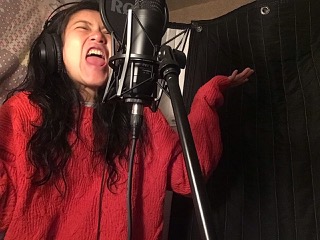
So you may know I’m lucky enough to have the utterly amazing Chris Devon narrate my Relic Hunters series (and he’s being very patient whilst I struggle with plot holes in book 3). Anyway, for a different perspective, I recently met the talented and super lovely Charlotte Chiew (scroll down for some very funny shots of here at work) at a networking event and invited her to share some thoughts on the benefits of audiobooks for children so over to her ….

The muscles you(r children) work listening to audiobooks

I’ll admit – I only really started listening to audiobooks after I began narrating them. 

Of course, like many a good parent, I’d bought (and listened together with) my kids those read-along books with CDs that ring a little lovely chime every time the narrator had come to the end of the page and it was time to turn the page. My boys loved them. I think they felt pretty good about themselves, pretending they were able to read before they actually could decipher the words themselves. 

Then, as they got older and silently devour all sorts of books by themselves, they also started on audiobooks. I honestly can’t remember how or when, but they were the pioneer audiobook listeners in my household. I remember the first times I found the house silent, the child(ren) immobilized, headphones on, eyes glazed. And I thought, who cast this spell and how?

Obviously, I wanted this magical super power too.  

While I won’t be sharing the secrets of how I spin a spellbinding tale, I will share 2 interesting facts about audiobooks that may shed some light on how and why some audiobook narrators have listeners eating out of their hands.

1. Our brain works as hard whether we’re reading a story ourselves or listening intently to someone telling it to us.

From an evolutionary point of view, reading came after storytelling and listening, and so it uses processes in the brain that were already there from learning by listening. If you think about reading as the process of decoding the written letters, then it means that if you’ve learnt to read, the decoding is pretty much automatic which means it no longer requires much effort. The effort then, is in what you do with the information you get from the decoding (reading) or the listening (storytelling). 

(There’s been lots of scientific research on this topic, but here is where I gleamed my understanding of memory & learning http://www.danielwillingham.com/articles.html)

2. Listening to audiobooks is more engaging than watching films – even if you don’t realise it!

A study from UCL found that listening to audiobooks creates a more intense psychological and emotional reaction that watching television or film. A quick google search will bring up all the statistics and research data if that’s your cup of tea. But think about it – the results aren’t that surprising. When listening to an audiobook, you have to work your imagination so much more than when watching a film. (Remember how the latest release of that book you loved was never as satisfying as when you read it?) In addition to your imagination working hard, often times, you experience an intimate storytelling with audiobooks. A beautiful voice in your ears (thank you Noise-cancelling-headphones), drawing you into the world of the story. The narrator heightens the experience for the listener and has the ability to make an audiobook unforgettable.

The imobilised, glazed-eyed state I find my kids in when they listen to audiobooks must just be their imagination hard at work. With some help from an expert narrator…

3. Insider tips

If you’re new to audiobooks and I’ve tempted you to try, here are some options and tips for looking for great narrators:

  1. Most audiobook online retail platforms will let you trial a subscription for a month. Try Kobo, Audiobook.com and Audible – you get free book/s during your trial, which you get to keep even if you cancel your subscription. Afterwhich you’ll get credits which usually equates to 1 book every month. With a Kobo subscription, you’ll also get books on promotional prices in addition to your 1 “free” book a month. And if you accumulate more credits that you can use them, Kobo lets you”pause” your subscription if you don’t want to cancel but just haven’t finished using those credits.
  2. Check if you local library has a partnership with Libby App (by Overdrive). We are members of Lewisham Library (London) and have enjoyed many audiobooks for free on our library cards.
  3. You can get free audiobooks from Librivox, Googleplay Audiobooks, and even Apple iTunes. 
  4. Before you buy/rent/download-a-free audiobook, always check out the retail sample. That’s the equivalent of a traditional book’s “blurb”. Most audiobook producers will choose a section that will let you have a good idea of how the narrator tells the story. However, some retailers will cut their own retail sample and sometimes, that means you just hear the copyrights and opening credits…
  5. Look out for the Earphones award for the audiobook, or the Golden Voice award for the Narrator. These are awards given by AudioFile Magazine, for truly exceptional titles that excel in narrative voice and style, characterizations, suitability to audio, and enhancement of the text.

About Charlotte Chiew

Charlotte Chiew is an audiobook narrator-producer, voiceover artist, and actor. She specializes in narrating content for young audiences and has performed for children and young audiences all over the world in theatres, community halls, festivals, shopping malls, bookshops, and on recorded medium. Charlotte is currently narrating and producing the Paramedic Chris Series– a children’s book series about the Ambulance service – by Tim Parsons.

Find out more about Charlotte’s work on https://Charlottechiew.com

Listen to Charlotte spin a yarn on the Tauk Kids’ Youtube Channel https://bit.ly/TAUKKidsYT

How to get into a writing habit (and keep it)

I must be part magpie – I love shiny new things. Unfortunately, this includes collecting shiny new writing projects. So I need help! I reviewed the first journal in this series a while ago and love the way it helps keep me from those oh-so-tempting distractions (you can about read it here). Having not quite finished Book 1, I was interested in what the next 52 weeks would look like, and how a blank journal could possibly be different! Of course, I had to ask the author what the difference would be, so here she is …

Why create a second volume of an undated journal and planner?

That’s an excellent point, and was my thought exactly when I first received a question about ‘next year’s version’. What next year’s version? It’s an undated journal and planner. Something you can buy and use over and over.

‘Right! I thought you might change the cover or something, so we don’t end up with a row of the same journals a few years from now.’

Now that I hadn’t considered. I, who wouldn’t even buy the same notebook twice…

Obviously, I could have taken the easy road after that seed was planted and simply slapped a new cover on the version I already had. That, however, isn’t how I do things (I might have to work on that at some point). So, instead of merely swapping covers, I handpicked fifty-three new writing quotes and came up with as many new writing prompts and exercises. Of course, I also gave the journal and planner a new look, because why not? (I really have to work on that not taking the easy road, don’t I?)

Without further ado, here’s the second volume of the 52 Weeks of Writing Author Journal and Planner. I hope you’ll enjoy it as much as I enjoyed creating this new version.

Mariëlle

P.S. There’s no actual order to the two volumes. If you picked this one up first, you can simply get the other one next year.

DISCOUNT!

Anyway, when I finish my current (blue journal), I’ll definitely get another. And I do love purple, so I think it will be book two. By the way, this is a hefty tome, and you need a paper copy, so it’s well worth the price. But if you want to print at home, you can purchase a printable PDF through: https://payhip.com/b/0YgJ Get 50% off until 31 March 2021 by using the coupon code 52WOW during checkout.

52 Weeks of Writing:

  • makes you plan, track, reflect on, and improve your progress and goals for an entire year;
  • helps you unravel the truth about why you aren’t where you want to be; and
  • keeps you writing through weekly thought-provoking quotes and prompts.

With this second volume of the 52 Weeks of Writing Author Journal and Planner, writing coach and writer Mariëlle S. Smith brings you the same successful strategies to craft the perfect writing practice as she did in the first journal. The only difference? Fifty-three different writing quotes and prompts and a brand-new look!

Scavenger hunt extravaganza

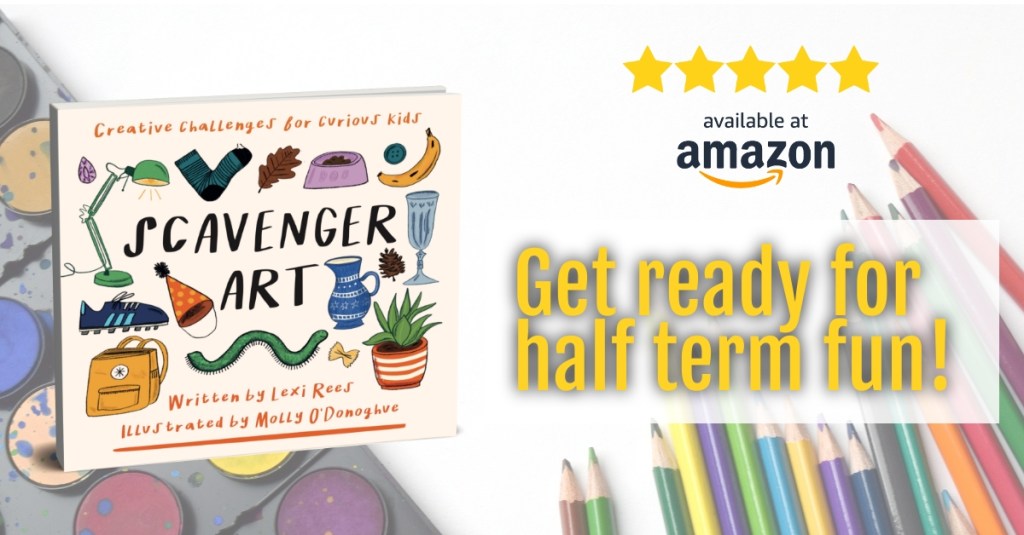
As we enter another half term in lockdown, most of us are searching for activity inspiration. Just before Christmas, my latest book, Scavenger Art was published which hopefully solves some of those “I don’t know what to do/ draw” cries. I’ve been thrilled with all the amazing reviews from parents, teachers, mindfulness coaches, and young artists. And was delighted to see it included in this article, originally published on Kickstarterz and shared with their permission, so here you go …

There are so many different variations and themes you could adopt to create a fun and exciting scavenger hunt. The best thing about them is children absolutely love them. From colour to themed scavenger hunts, the possibilities are endless. Below are some of our favourite variations of different scavenger hunt ideas you could do, or get creative and invent your own. (We would love to hear your favourite).

  • Colour – By using colour in the hunt, young children have the opportunity to learn about colours and for older children it’s an exciting challenge to find such a colourful mix of items. Why not create a rainbow scavenger hunt, where children have to find items the colour of the rainbow

clolour scavenger hunt

  • Letters – Finding items beginning with certain letters is another fun and challenging hunt we can use. Why not have your child find items that spell their name, football team, pet name etc. Whatever their age or ability this one is a fantastic way to enhance learning and fun.
  • Treasure Hunt – Get creative and draw a map of your house/garden and put clues to the location of the treasureyou want your children to find. Items could include, favourite toy, teddy bear, real or chocolate coins.
  • Team Hunt – More than 1 child? Then why not create team games and see who can find items on the list first. If not you could always have parent vs child hunts were you can create a list for each other, say 7 items each and see who can find all the items the fastest.
  • Theme – There are so many themes you could include to make your scavenger hunt feel more topical and relevant. Such as seasonal (things found in spring, autumn etc), football themed, superhero and senses (things you can smell, for example).
  • Art/Mindfulness – A great activity we came across was the mixing of drawing and a scavenger hunt, creating Scavenger art. Perfect for children and families alike, with so many great skills acquired, such as creativity, mindfulness and developing drawing skills.

One book we came across was a perfect recourse for this different kind of hunt, and can be found here. With 52 scavenger hunt ideas in, it’s a perfect companion to any scavenger hunt.

Scavenger art
Scavenger Art, Lexi Rees

Review

“What a wonderful book! It’s easily accessible and adaptable for any circumstances, age, or even weather. An ideal present, this fun book would be appreciated by any child who loves to draw. Invaluable for both parents and educators, there are hours of enjoyment to be had within its pages.” Art teacher

So there you have it, a basic list of ideas to get you started for a scavenger hunt for kids and parents alike.