Do you want to write great dialogue?

Last week, I was working with a very talented young writer on his first book and I noticed he was writing dialogue confidently. Usually I see one or other extremes: either no dialogue at all, or rambling dull dialogue, but he was using it so well to move the story forward. And he’s only 10 years old. Definitely a budding author there.

Personally, I love writing dialogue, but I am always trying to improve so I read a lot of books on the craft of writing. I therefore leapt at the opportunity to take part in the blog tour for The Wordsmiths Guide to Writing Authentic Dialogue by Elizabeth Hurst. And I’m so glad I did.
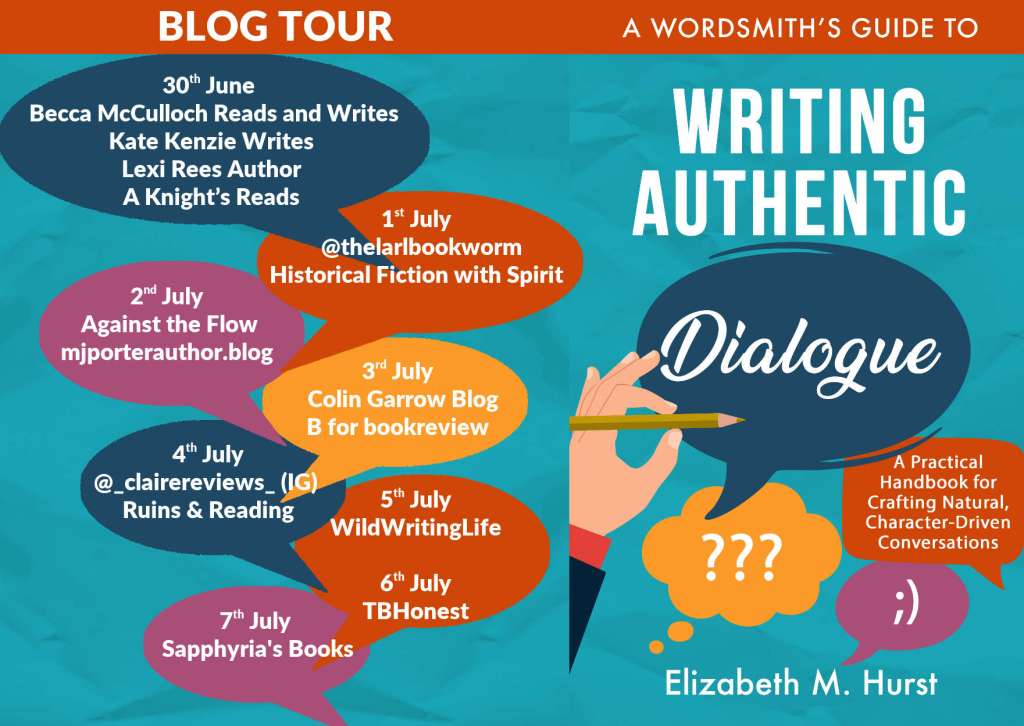
Straight away it’s clear Elizabeth knows her stuff. And it’s so easy to read – not preachy, just good. I read it on my kindle relaxing on a sun lounger on holiday. And I couldn’t nod off. It gets stuck in straight away with practical insights. Did you know there are six (yes, six!) jobs that dialogue must do? Then you get into subtext: the hidden layer under the scene where the real issues unfold. As for the chapter on what to do if you feel the dreaded “As you know” sneaking in… well, it makes it sound so obvious.

Do I recommend this to anyone wanting to improve their writing, regardless of whether you are published or unpublished? Absolutely. In fact, I’m going to work my way through the whole series (there are 5 books on different aspects of planning, writing and editing). That’s how good this is.

Blurb

Do you lack confidence when writing dialogue for your fictional characters?
Do you want to learn how to make each person have a distinctive voice?

Real conversations wander. Fictional dialogue can’t afford to.

A Wordsmith’s Guide to Writing Authentic Dialogue is a practical, encouraging craft book for fiction writers who want dialogue that does more than fill the page. You’ll learn how to make every exchange purposeful, character-specific, and charged with subtext—without gimmicks, melodrama, or the dreaded “As you know…” exposition.

You will learn how to:

  • build distinct voices through rhythm, worldview, and verbal habits (not quirky spelling);
  • show status and power through questions, interruptions, silence, and topic control;
  • handle tags, beats, and action cleanly so dialogue moves instead of clogs;
  • write conflict that escalates and changes shape (without repeating itself);
  • approach trauma, consent, and emotionally heavy scenes without voyeurism or melodrama.

You’ll also find:

  • short, generic examples you can learn from immediately;
  • focused exercises you can complete in 10–20 minutes;
  • diagnose-and-rewrite case studies (where relevant);
  • checklists: quick bullet points to use while drafting and revising.

If your characters explain too much, sound the same, circle the point, or talk in a void—this guide will give you clear tools to diagnose the problem and rewrite with confidence.

Have the confidence to write dialogue that reflects the best of your characters, and the best of your writing. Pick up your copy today.

About the author
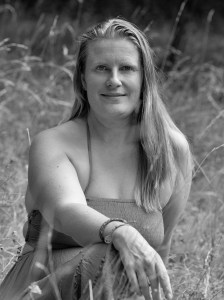
Elizabeth was born and bred in the picturesque harbour town of Whitehaven in the northwest of England, where the long, wet winters moulded her into a voracious reader of fiction to escape the dismal weather.

In 2016, Elizabeth set up her freelance editing and proofreading business, EMH Editorial Services. In 2018, she quit the corporate world and concentrated her energy full-time towards her love of the written word.

Elizabeth has published timeslip novellas (the Lost Souls series) and a stand-alone novel, A Light Shines in Darkness, based on Blessed Angelina of Marsciano. She is also the author of The Wordsmith’s Guides, a series of nonfiction books on the craft of writing.

Elizabeth now lives with her husband in the warm and sunny south of France, where the wine is cheaper than the water, and the cats spend their days hunting lizards and dreaming of the birds that roost on the roof.
Why writing is like coffee.

As you know, I do lots of school visits. And one of the questions I’m often asked (along with the random qs like “What’s your least favourite food?” – it’s custard if you’re curious), is about my writing process from idea generation to finished book. And, like the kids I meet, I’m really nosy about the writing process for other writers. Get a group of authors together and conversation is sure to turn at some point to the big debate: are you a plotter or an pantser. Which is why I read so many writing books. Anyway, today, I have Bonni Goldberg with me, author of The Write Balance: How to Embrace Percolation, Revision & Going Public. So here she is …

I’m especially delighted to be here on Mum’s Book Blast because it speaks to my own identities: I’m a mum, a writer and my debut picture book is coming out in Fall, 2023. I’m even part of a FB group especially for mums who write. I see a lot of overlap between my Mum Self, my Writing Self. Much like being a mum, being a writer is a joy and an endless series of negotiations to achieve balance. And when I say balance here, I don’t mean all at one time, like two sides of a scale. In The Write Balance, it’s about not neglecting time and attention to, or creating a hierarchy from, each aspect of being a writer, especially percolation, revision, and going public.  Percolation is everything that takes place before you put ideas into written words. I know so many writers that judge themselves harshly as “not writing” when they’re percolating. They say, it doesn’t count as writing if I don’t put out words. But with a slight shift in perspective, it becomes clear that there are no written words without percolating first:

(from The Write Balance pp. 14-15)

However you do it, the point of percolation is to let the little cells of the idea gather, divide, and multiply in order to sustain life and energy outside of your thoughts, to coalesce into something that isn’t crushed by written words or blown away by your busy mind. Once the idea has introduced itself, but before you decide to explore it in writing, it needs to take hold and brew in your body and psyche. Something new has stimulated your system. It’s full of the potential to grow into a life separate from you. Like any seed, if the idea is forced into the light of day too soon by impatience or expectations, it shrivels. I’ve lost pieces because I’ve confused inspiration with ripeness, because I was afraid I’d forget the idea if I didn’t get it all down right away, because I made keeping to my writing schedule more important than the writing. It took me a long time to learn that keeping an idea inside for a while helps me to slow down, adjust my expectations, and respect my ideas. 

Edna O’Brien once said, “Writing is like carrying a fetus.” Just as a fetus first grows amphibian-like gills and a tail before it takes its final human form, so a piece of writing first needs to develop into a pre-written state in the world of the psyche. Percolation is the incubation time, but there’s no standard gestation period like nine months for a human baby or twenty-one days for a chick. You can’t predict that it will take six weeks for a short story to grow or twelve minutes for a poem. You might percolate for ten minutes or ten years. One of your Writing Self’s roles is to live with your ideas, get to know them, and intuit when they are ready to see the light of words. 

One way you can tell an idea is growing is that you notice other events or images in the world or in your memory that connect to your maturing idea. When I was living purely with the idea of writing an essay about making borscht, I saw a relationship between me scavenging my fridge for the ingredients and a mouse in my kitchen foraging for crumbs. That connection ultimately affected the tone of my piece.

Back to me.

This is EXACTLY what I say to the kids when they ask me about my process. I let ideas percolate. Actually I use the word “fester”. But given my caffeine addiction, they are probably percolating. I tell them that some ideas fester for ages, for example, I still want to write a story about a lighthouse, but it’s been on my list for about 3 years now. Almost as long as my friend has had “Grout bathroom” on her list.

Anyway, if you’re interested, here is more info on the book.

Blurb

Bonni Goldberg’s The Write Balance introduces you to alternative perspectives and motivation for lasting creative fulfillment. This companion book to the beloved bestseller, Room to Write is filled with encouragement, tools, examples and exercises.

Through years of teaching writing in workshops and in classrooms, Bonni has seen that the writers who are most passionate and grounded in their Writing Self embrace three aspects of the writing process: nurturing ideas, revising to best communicate those ideas, and completing the writing cycle by going public.

In this powerful guide, Bonni invites you to explore these creative stages which are essential to satisfying your Writing Self.

Use The Write Balance to:

  • Find Fulfillment as a Writer
  • Explore Creative Writing
  • Add to Your Writer’s Toolbox for Perspective
  • Overcome Writer’s Block
  • Teach Creative Writing
  • Inspire Your Writing Group
  • Give as Gifts to the Writers in Your Life

About the author

Bonni Goldberg is the author of The Write Balance: How to Embrace Percolation, Revision & Going Public, the companion book to the best-seller Room to Write: Daily Invitations to a Writer’s Life. Bonni is an award-winning poet and writer. She is the creator of the 2 Minute Journals™ series. Both traditionally and indie published, her books include non-fiction for adults and fiction and non-fiction for young readers. Her essays and blog posts can be found in numerous print and online publications.

Bonni teaches creative writing at colleges and leads writing workshops internationally for all ages. She knows everyone is creative, and she supports people to discover and share their authentic, meaningful and imaginative experiences through words. Whether through her writings or through teaching, her methods and perspectives continue to empower thousands of adults, families, and children.

Bonni is also a Jewish educator. She speaks, writes, and leads workshops on Jewish topics such as Jewish identity, rituals and antisemitism at Jewish women’s events, JCCs, and conferences. 

Bonni Goldberg lives in Portland, Oregon with her partner in life, and some creative projects, artist Geo Kendall.