Last week, I was working with a very talented young writer on his first book and I noticed he was writing dialogue confidently. Usually I see one or other extremes: either no dialogue at all, or rambling dull dialogue, but he was using it so well to move the story forward. And he’s only 10 years old. Definitely a budding author there.
Personally, I love writing dialogue, but I am always trying to improve so I read a lot of books on the craft of writing. I therefore leapt at the opportunity to take part in the blog tour for The Wordsmiths Guide to Writing Authentic Dialogue by Elizabeth Hurst. And I’m so glad I did.
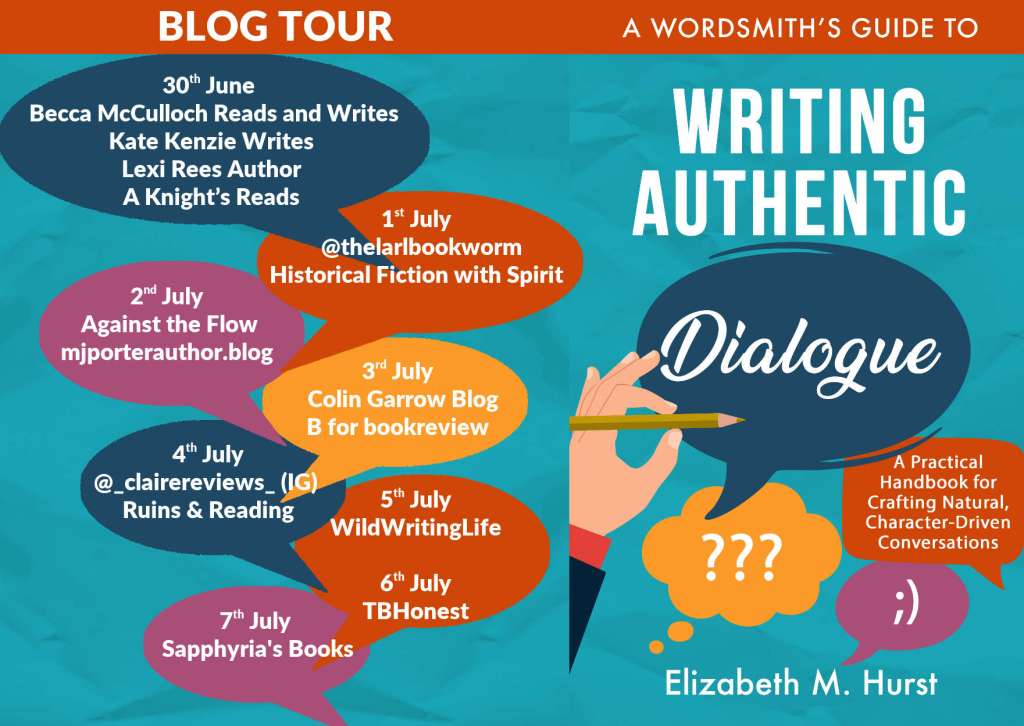
Straight away it’s clear Elizabeth knows her stuff. And it’s so easy to read – not preachy, just good. I read it on my kindle relaxing on a sun lounger on holiday. And I couldn’t nod off. It gets stuck in straight away with practical insights. Did you know there are six (yes, six!) jobs that dialogue must do? Then you get into subtext: the hidden layer under the scene where the real issues unfold. As for the chapter on what to do if you feel the dreaded “As you know” sneaking in… well, it makes it sound so obvious.
Do I recommend this to anyone wanting to improve their writing, regardless of whether you are published or unpublished? Absolutely. In fact, I’m going to work my way through the whole series (there are 5 books on different aspects of planning, writing and editing). That’s how good this is.
Blurb
Do you lack confidence when writing dialogue for your fictional characters?
Do you want to learn how to make each person have a distinctive voice?
Real conversations wander. Fictional dialogue can’t afford to.
A Wordsmith’s Guide to Writing Authentic Dialogue is a practical, encouraging craft book for fiction writers who want dialogue that does more than fill the page. You’ll learn how to make every exchange purposeful, character-specific, and charged with subtext—without gimmicks, melodrama, or the dreaded “As you know…” exposition.
You will learn how to:
- build distinct voices through rhythm, worldview, and verbal habits (not quirky spelling);
- show status and power through questions, interruptions, silence, and topic control;
- handle tags, beats, and action cleanly so dialogue moves instead of clogs;
- write conflict that escalates and changes shape (without repeating itself);
- approach trauma, consent, and emotionally heavy scenes without voyeurism or melodrama.
You’ll also find:
- short, generic examples you can learn from immediately;
- focused exercises you can complete in 10–20 minutes;
- diagnose-and-rewrite case studies (where relevant);
- checklists: quick bullet points to use while drafting and revising.
If your characters explain too much, sound the same, circle the point, or talk in a void—this guide will give you clear tools to diagnose the problem and rewrite with confidence.
Have the confidence to write dialogue that reflects the best of your characters, and the best of your writing. Pick up your copy today.
About the author
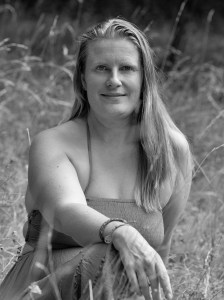
Elizabeth was born and bred in the picturesque harbour town of Whitehaven in the northwest of England, where the long, wet winters moulded her into a voracious reader of fiction to escape the dismal weather.
In 2016, Elizabeth set up her freelance editing and proofreading business, EMH Editorial Services. In 2018, she quit the corporate world and concentrated her energy full-time towards her love of the written word.
Elizabeth has published timeslip novellas (the Lost Souls series) and a stand-alone novel, A Light Shines in Darkness, based on Blessed Angelina of Marsciano. She is also the author of The Wordsmith’s Guides, a series of nonfiction books on the craft of writing.
Elizabeth now lives with her husband in the warm and sunny south of France, where the wine is cheaper than the water, and the cats spend their days hunting lizards and dreaming of the birds that roost on the roof.


